“Almost always the men who achieve these fundamental inventions of a new paradigm have been either very young or very new to the field whose paradigm they change.”
Quote by Thomas Kuhn
Work
The Structure of Scientific Revolutions: 50th Anniversary Edition
This influential work presents the concept of paradigm shifts, arguing that scientific progress does not occur through continuous accumulation of knowledge but rather through periodic revolutions in which one scientific worldview is replaced by another. The book explores how normal science operates within established frameworks and what happens when accumulating anomalies lead to fundamental changes in scientific understanding. This anniversary edition marks fifty years since the original publication of this seminal text that has profoundly influenced discussions across philosophy, history, and sociology of science. more
Author
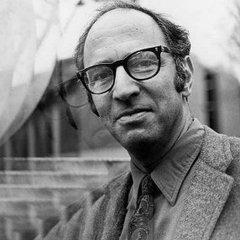
Thomas Kuhn
Thomas Kuhn (July 18, 1922 - June 17, 1996) was an influential American philosopher of science, known for his contributions to the theory of scientific revolution. His work has had a profound impact on the fields of philosophy of science, history of science, and science studies. more
You May Also Like
Source: Poems, Plays and Essays
“Profundity of thought belongs to youth, clarity of thought to old age.”
Source: Delphi Complete Works of Friedrich Nietzsche (Illustrated): Friedrich Nietzsche
Source: Voltaire – The Philosophical Works: Treatise On Tolerance, Philosophical Dictionary, Candide, Letters on England, Plato’s Dream, Dialogues, The Study of Nature, Ancient Faith and Fable, Zadig…: From the French writer, historian and philosopher, famous for his wit, his attacks on the established Catholic Church, and his advocacy of freedom of religion and freedom of expression
Source: Alfred, Lord Tennyson: Selected Poetry: A Broadview Anthology of British Literature Edition
“Young men should prove theorems, old men should write books.”