“Twice in my life I have spent two weary and scientifically profitless years seeking evidence to corroborate dearly loved hypotheses that later proved to be groundless; times such as these are hard for scientists-days of leaden gray skies bringing with them a miserable sense of oppression and inadequacy.”
Quote by Peter Medawar
Work
Advice to a young scientist
This book provides valuable advice and wisdom for young scientists, covering topics such as research methods, career development, and the importance of curiosity and perseverance. more
Author
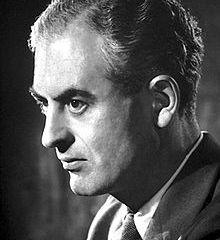
Peter Medawar
Peter Medawar was a British biologist and immunologist recognized for his work in transplantation immunology. He was awarded the Nobel Prize in Physiology or Medicine in 1960 for his discovery of immunological tolerance. more
You May Also Like
Source: The Major Prose of Thomas Henry Huxley
Source: A Supplementary Volume to the Works of Alexander Pope, Esq: Containing Pieces of Poetry, Not Inserted in Warburton's and Warton's Editions : and a Collection of Letters, Now First Published
Source: The Rambler: A Periodical Paper, Published in 1750, 1751, 1752