Quotessence
Home / Quotes / Quote by Leroy Chiao

Quote by Leroy Chiao

“Where we're operating is orbital adventures. We would offer five to seven days in low Earth orbit aboard our own spacecraft where customers would have the view of the Earth; get to experience really living in space, probably conducting some scientific investigations that we would piggyback onto those flights. So, they would have the whole experience, kind of a mini-experience of what professional astronauts have.”

Quote by Leroy Chiao

Author
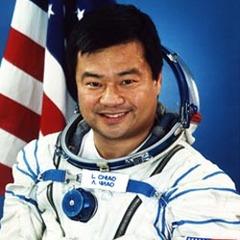
Leroy Chiao
Leroy Chiao

Leroy Chiao is an American engineer born on August 28, 1960. He is renowned for his exceptional contributions to the field of space exploration, serving as an astronaut for the National Aeronautics and Space Administration (NASA) and participating in multiple space missions. more

You May Also Like

“The Russians right now require a customer coming in and spending about six months or so in Russia and they have to learn some Russian. They have to learn some critical words so they can, in an emergency, at least have minimum communication with the Russian commander of the Soyuz. They also have to learn systems and I think this just evolved that way. They just thought, what is the minimum set of things we think we can train someone to be more or less competent in our systems? And so that's what these guys go through. So, it's not just like buying a ticket and getting on an airliner.”

“The expense of getting into space is the rocket launch, the rocket itself. Rocket's right now, commercial rockets cost probably somewhere between $50, or $120, or $150 million per launch. And those are all expendable. That is, you've got to buy a new rocket for each launch. So, that really is the critical part. If there was some kind of really, a revolutionary breakthrough and the price of rockets fell by an order of magnitude, I mean, just imagine what that would do as far as getting access to more ordinary people.”

“If you think about the energy that a rocket engine has to put out and all the fuel and you're sitting on top of like a bomb. And on the Space Shuttle, that big orange tank is filled with liquid hydrogen and liquid oxygen, the white cell rocket boosters on the sides are filled with solid propellant. There's a lot of energy in all those chemicals there and you've got to control it in a way so it doesn't explode. So, there's a lot of plumbing, a lot of valving, a lot of control systems, and it's a very complicated thing. So, how do you bring the price of that down?”

“The United States, Russia, and China are the only three countries in the world that can launch astronauts into space. Mostly in the U.S. you see some companies trying to launch private commercial people into space, but nobody's done it yet. The only private vehicle that's made it into space so far is Spaceship 1 in 2004, and that was an effort that was funded by one of the Microsoft founders, and he spent about $20 million to develop this spacecraft to do a sub-orbital flight. And it's not the same as going into orbit, but it was a huge first step.”

“If you increase the number of rockets you build and you buy, then it's the scale of the economy, the price is going to come down. It may not come down in order of magnitude, but if several commercial ventures start being successful and there becomes a bigger market for these rockets, the price will naturally come down a bit. That's why I think Excalibur Almaz, we're a little bit unique in that we don't look at our so-called competition with disdain, we want them to succeed and it needs to have more than one player. Even if we are successful, we couldn't handle the entire market ourselves.”

“One of the biggest concerns about going out beyond lower Earth orbit is the radiation. We find that exercise seems to counteract a lot of the negative effects of space flight, like bone loss and muscle atrophy and cardiovascular systems issues. We exercise two hours a day on the station, which is a huge hit out of your day. It's great for staying in shape, but you know, it cuts into the productivity of the crew and if you look at how expensive it is to get a crew into space, if we can keep them healthy and have them exercise, but spend less time doing it, we can get more done.”

“Exercise is very important, first of all if you think about it, especially in a long flight like a six month space flight and on the ISS. If you didn't exercise and used the analogy on earth, it would be like laying in bed. So, just imagine laying in bed for several months, and even just trying to get up and walk, you probably wouldn't be able to. But if you got up and you exercised two hours a day, you'd probably be okay, and that's the same in space.”

“We were doing something called telemedicine, where we were using the ultrasound. One interesting application of this ultrasound is the possibility that you could possibly use it to measure critical bone areas during a long space mission and track if you're losing bone in these areas. On Earth, when they check you for bone loss, you get in this big machine. It's the size of a room and it's got a platform with an x-ray that scans your whole body and in critical areas and it takes a while and it just wouldn't be practical to have a machine like that in space.”

“The ultrasound that has application not only in space for a long mission or for a mission to the Moon or Mars, but also in remote areas on the Earth. Not even just - I'm not even talking about expeditions like to the Antarctic, but just a remote area, a small town somewhere. The local doctor is not going to know everything, and so if that person can link in with a diagnostic ultrasound to the hospital in New York City through the internet, then they can do a very quick diagnosis of something that's wrong with someone that's in this remote area.”

“We have self-assessment tools, computer-based tools to see how we are performing mentally in outer space and there's some also very interesting technology and work that's being funded by NRSBI to look at facial recognition to look at your patterns to see if you're experiencing stress or fatigue. It's a kind of thing that I think will gain acceptance with gradually. But it probably has more to immediate application in things like homeland security, and looking at facial recognition of people going through airports and things like that to see who's under stress.”