Quotessence
Home / Quotes / Quote by Elizabeth Cady Stanton

Quote by Elizabeth Cady Stanton

Work

History of Woman Suffrage ...: 1883-1900

This book provides an in-depth look at the pivotal period in the fight for women's suffrage in the United States, covering the years from 1883 to 1900. It delves into the efforts, strategies, and challenges faced by suffragettes during this time, offering a detailed narrative of the movement's progression. more

Author
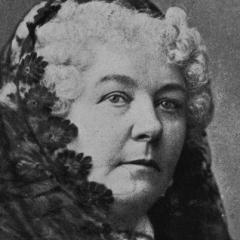
Elizabeth Cady Stanton

Elizabeth Cady Stanton, born on November 12, 1815, and died on October 26, 1902, was a pioneering American activist for women's rights. She was a key figure in the women's rights movement, known for her dedication to the fight for women's suffrage and gender equality. more

You May Also Like

“The point I wish plainly to bring before you on this occasion is the individuality of each human soul--our Protestant idea, the right of individual conscience and judgment--our republican idea, individual citizenship. In discussing the rights of woman, we are to consider, first, what belongs to her as an individual, in a world of her own, the arbiter of her own destiny, an imaginary Robinson Crusoe with her woman Friday on a solitary island. Her rights under such circumstances are to use all her faculties for her own safety and happiness.”

“Everyone in the full enjoyment of all the blessings of his life, in his normal condition, feels some individual responsibility forthe poverty of others. When the sympathies are not blunted by any false philosophy, one feels reproached by one's own abundance.”

“The most fitting monuments this nation can build are schoolhouses and homes for those who do the work of the world. It is no answer to say that they are accustomed to rags and hunger. In this world of plenty every human being has a right to food, clothes, decent shelter, and the rudiments of education.”

“The girl must early be impressed with the idea that she is to be "a hand, not a mouth"; a worker, and not a drone, in the great hive of human activity. Like the boy, she must be taught to look forward to a life of self-dependence, and early prepare herself for some trade or profession.”

“Let the girl be thoroughly developed in body and soul, not modeled, like a piece of clay, after some artificial specimen of humanity, with a body like some plate in Godey's book of fashion, and a mind after the type of Father Gregory's pattern daughters, loaded down with the traditions, proprieties, and sentimentalities of generations of silly mothers and grandmothers, but left free to be, to grow, to feel, to think, to act. Development is one thing, that system of cramping, restraining, torturing, perverting, and mystifying, called education, is quite another.”