Quotessence
Home / Quotes / Quote by Mary Russell Mitford

Quote by Mary Russell Mitford

Work

Memoirs and Letters of Charles Boner: With Letters of Mary Russell Mitford to Him During Ten Years

Memoirs and Letters of Charles Boner: With Letters of Mary Russell Mitford to Him During Ten Years is a collection of personal correspondence and reflections. It includes the memoirs of Charles Boner, alongside a series of letters exchanged between him and Mary Russell Mitford over a period of ten years. The volume offers insights into the personal lives and thoughts of both individuals, providing a glimpse into their relationship and the social context of the time. more

Author
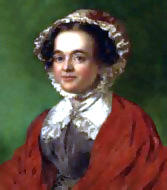
Mary Russell Mitford

Mary Russell Mitford, born on December 16, 1787, and died on January 10, 1855, was a renowned British author, playwright, and traveler in the 19th century. Known for her humorous and witty writing style, Mitford's works have been beloved by readers for their delicate emotional descriptions. more

You May Also Like

“The tale of the Monkey Girl gave me wat I needed most at a critical time in my life: the image of the creative and complex woman, unique to herself but willing to share those considerable gifts with a man capable of intuiting the wealth of her worth hidden beneath the skin. But more than that, the Monkey Girl also suggested that I need not be afraid of the fragile happily-ever-after, that I had resources of my own, and that I would not have to contort myself into a restrictive social role for fear of losing that fairytale ending.”

“A red map isn't easy to follow. Any document made of blood and bones is tricky. Wrong turns are easily made, and there are often piles of stones in the road. A person has to disregard time and sorrow and all the damage done. If you follow, if you dare, the thread always leads to whomever or whatever you've forgotten.”

“On this proud and beautiful mountain we have lived hours of fraternal, warm and exalting nobility. Here for a few days we have ceased to be slaves and have really been men. It is hard to return to servitude.”

“If adventure has a final and all-embracing motive, it is surely this: we go out because it is our nature to go out, to climb mountains, and to paddle rivers, to fly to the planets and plunge into the depths of the oceans... When man ceases to do these things, he is no longer man.”