Quotessence
Home / Quotes / Quote by Catherine of Genoa

Quote by Catherine of Genoa

Work

The life and sayings of Saint Catherine of Genoa

The book delves into the spiritual journey and profound insights of Saint Catherine of Genoa, highlighting her contributions to Christian mysticism and her impact on the Catholic Church. more

Author
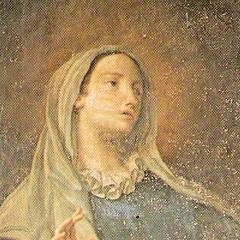
Catherine of Genoa
Catherine of Genoa

Catherine of Genoa, born on April 5, 1447, and died on September 15, 1510, was a Catholic saint from Genoa, Italy. She is known for her devout faith, charitable actions, and care for the poor. more

You May Also Like

“He that pines with hunger, is in little care how others shall be fed. The poor man is seldom studious to make his grandson rich.”

“Where no man thinks himself under any obligation to submit to another, and, instead of co-operating in one great scheme, every one hastens through by-paths to private profit, no great change can suddenly be made; nor is superior knowledge of much effect, where every man resolves to use his own eyes and his own judgment, and every one applauds his own dexterity and diligence, in proportion as he becomes rich sooner than his neighbour.”

“The world is living today in what might be described as an era of carnality, which glorifies sex, hates restraint, identifies purity with coldness, innocence with ignorance, and turns men and women into Buddhas with their eyes closed, hands folded across their breasts, intently looking inward, thinking only of self.”

“It has been left to the last Christians, or rather to the first Christians fully committed to blaspheming and denying Christianity, to invent a new kind of worship of Sex, which is not even a worship of Life. It has been left to the very latest Modernists to proclaim an erotic religion which at once exalts lust and forbids fertility . . . The new priests abolish the fatherhood and keep the feast - to themselves.”

“[Milton's] argument is (a) St. Augustine was wrong in thinking God's only purpose in giving Adam a female, instead of a male, companion, was copulation. For (b) there is a "peculiar comfort" in the society of man and woman "beside, (i.e. in addition to, apart from) the genial bed"; and (c) we know from Scripture that something analogous to "play" or "slackening the cords" occurs even in God. That is why the Song of Songs describes a thousand raptures...far on the hither side of carnal enjoyment.”