Quotessence
Home / Quotes / Quote by Victor Hugo

Quote by Victor Hugo

“An increase of tenderness always ended by boiling over and turning to indignation. He was at the point where we seek to adopt a course, and to accept what tears us apart.”

Quote by Victor Hugo

Work

Les Misérables

Victor Hugo's 'Les Misérables' is an epic narrative that delves into the lives of various characters, including Jean Valjean, a former convict seeking redemption, and Fantine, a woman struggling in poverty. The story is rich in historical detail and moral complexity, offering a profound examination of society's flaws and the resilience of the human spirit. more
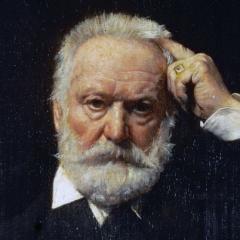
Author

Victor Hugo
Victor Hugo

Victor Hugo, a French romantic poet, novelist, and playwright, was born on February 26, 1802, and died on May 22, 1885. He is considered one of the greatest writers in French literary history, known for his profound humanistic concerns and rich imagination. more

You May Also Like

“My Papa's Waltz: The whiskey on your breath Could make a small boy dizzy; But I hung on like death: Such waltzing was not easy. We romped until the pans Slid from the kitchen shelf; My mother's countenance Could not unfrown itself. The hand that held my wrist Was battered on one knuckle; At every step you missed My right ear scraped a buckle. You beat time on my head With a palm caked hard by dirt, Then waltzed me off to bed Still clinging to your shirt.”

“It is only on the battlefield of ideas that the best ones can be recognized and ultimately prevail. Only those afraid of the truth seek to silence debate, intimidate those with whom they disagree, or slander their ideological counterparts. Those who know they are right have no reason to stifle debate because they realize that all opposing arguments will ultimately be overcome by fact.”

“We need a better way to talk about eating animals. We need a way that brings meat to the center of public discussion in the same way it is often at the center of our plates. This doesn't require that we pretend we are going to have a collective agreement. However strong our intuitions are about what's right for us personally and even about what's right for others, we all know in advance that our positions will clash with those of our neighbors. What do we do with that most inevitable reality? Drop the conversation, or find a way to reframe it?”