Quotessence
Home / Quotes / Quote by Michelle Alexander

Quote by Michelle Alexander

“The wave of punitiveness that washed over the United States with the rise of the drug war and the get tough movement really flooded our schools. Schools, caught up in this maelstrom, began viewing children as criminals or suspects, rather than as young people with an enormous amount of potential struggling in their own ways and their own difficult context to make it and hopefully thrive. We began viewing the youth in schools as potential violators rather than as children needing our guidance.”

Quote by Michelle Alexander

Author
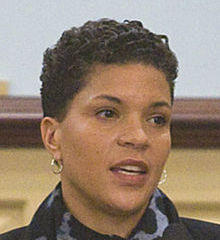
Michelle Alexander
Michelle Alexander

Michelle Alexander is a distinguished professor of law at the University of California, Berkeley. Born on October 7, 1967, she is recognized for her expertise in criminal justice and civil rights. Alexander has authored numerous articles and books on the subject of mass incarceration in the United States and its effects on African American communities. more

You May Also Like

“The mythology around colorblindness leads people to imagine that if poor kids of color are failing or getting locked up in large numbers, it must be something wrong with them. It leads young kids of color to look around and say: "There must be something wrong with me, there must be something wrong with us. Is there something inherent, something different about me, about us as a people, that leads us to fail so often, that leads us to live in these miserable conditions, that leads us to go in and out of prison?"”

“I think this mythology - that we're all beyond race, of course our police officers aren't racist, of course our politicians don't mean any harm to people of color - this idea that we're beyond all that (so it must be something else) makes it difficult for young people as well as the grown-ups to be able to see clearly and honestly the truth of what's going on. It makes it difficult to see that the backlash against the Civil Rights Movement manifested itself in the form of mass incarceration, in the form of defunding and devaluing schools serving kids of color and all the rest.”

“Of course, no one should be trapped in bad schools or bad neighborhoods. No one. But I think we need to be asking a larger question: How do we change the norm, the larger context that people seem to accept as a given? Are we so thoroughly resigned to what "is" that we cannot even begin a serious conversation about how to create what ought to be?”

“The education justice movement and the prison justice movement have been operating separately in many places as though they're in silos. But the reality is we're not going to provide meaningful education opportunities to poor kids, kids of color, until and unless we recognize that we're wasting trillions of dollars on a failed criminal justice system.”

“Kids are growing up in communities in which they see their loved ones cycling in and out of prison and in which they are sent the message in countless ways that they, too, are going to prison one way or another. We cannot build healthy, functioning schools within a context where there is no funding available because it's going to building prisons and police forces.”

“We're foolish if we think we're going to end mass incarceration unless we are willing to deal with the reality that huge percentages of poor people are going to remain jobless, locked out of the mainstream economy, unless and until they have a quality education that prepares them well for the new economy. There has got to be much more collaboration between the two movements and a greater appreciation for the work of the advocates in each community. It's got to be a movement that's about education, not incarceration - about jobs, not jails.”

“It's important to teach students about the reality of the system, that it is in fact the case that they are being targeted unfairly, that the rules have been set up in a way that authorize unfair treatment of them, and how difficult it is to challenge these laws in the courts. We need to teach them how our politics have changed in recent years, how there has been, in fact, a backlash. But we need to couple that information with stories of how people in the past have challenged these kinds of injustices, and the role that youth have played historically in those struggles.”

“I think it's important to encourage young people to tell their own stories and to speak openly about their own experiences with the criminal justice system and the experiences of their family. We need to ensure that the classroom environment is a supportive one so that the shame and stigma can be dispelled.”