Quotessence
Home / Quotes / Quote by Michelle Alexander

Quote by Michelle Alexander

“We're foolish if we think we're going to end mass incarceration unless we are willing to deal with the reality that huge percentages of poor people are going to remain jobless, locked out of the mainstream economy, unless and until they have a quality education that prepares them well for the new economy. There has got to be much more collaboration between the two movements and a greater appreciation for the work of the advocates in each community. It's got to be a movement that's about education, not incarceration - about jobs, not jails.”

Quote by Michelle Alexander

Author
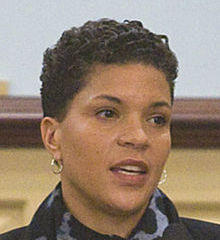
Michelle Alexander
Michelle Alexander

Michelle Alexander is a distinguished professor of law at the University of California, Berkeley. Born on October 7, 1967, she is recognized for her expertise in criminal justice and civil rights. Alexander has authored numerous articles and books on the subject of mass incarceration in the United States and its effects on African American communities. more

You May Also Like

“It's important to teach students about the reality of the system, that it is in fact the case that they are being targeted unfairly, that the rules have been set up in a way that authorize unfair treatment of them, and how difficult it is to challenge these laws in the courts. We need to teach them how our politics have changed in recent years, how there has been, in fact, a backlash. But we need to couple that information with stories of how people in the past have challenged these kinds of injustices, and the role that youth have played historically in those struggles.”

“I think it's important to encourage young people to tell their own stories and to speak openly about their own experiences with the criminal justice system and the experiences of their family. We need to ensure that the classroom environment is a supportive one so that the shame and stigma can be dispelled.”

“Just providing information about how bad things are, or the statistics and data on incarceration by themselves, does lead to more depression and resignation and is not empowering. The information has to be presented in a way that's linked to the piece about encouraging students to think critically and creatively about how they might respond to injustice, and how young people have responded to injustice in the past.”

“I was inspired by what students have done in some schools organizing walkouts protesting the lack of funding and that sort of thing. There are opportunities for students to engage in those types of protests - taking to the streets - but there is also writing poetry, writing music, beginning to express themselves, holding forums, educating each other, the whole range.”

“There is a tremendous amount of confusion and denial that exists about mass incarceration today, and that is the biggest barrier to movement building. As long as we remain in denial about this system, movement building will be impossible. Exposing youth in classrooms to the truth about this system and developing their critical capacities will, I believe, open the door to meaningful engagement and collective, inspired action.”

“Poetry has always mattered, through human history, through all kinds of cultures, all kinds of violence and human desolation, as well as periods of great human affirmation. It's been associated with the power of the word, with the sacred, with magic and transformation, with the oral narratives that help a people cohere.”