Quotessence
Home / Quotes / Quote by Michelle Alexander

Quote by Michelle Alexander

“Just providing information about how bad things are, or the statistics and data on incarceration by themselves, does lead to more depression and resignation and is not empowering. The information has to be presented in a way that's linked to the piece about encouraging students to think critically and creatively about how they might respond to injustice, and how young people have responded to injustice in the past.”

Quote by Michelle Alexander

Author
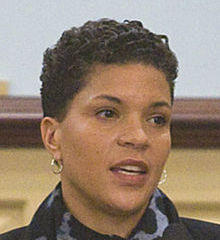
Michelle Alexander
Michelle Alexander

Michelle Alexander is a distinguished professor of law at the University of California, Berkeley. Born on October 7, 1967, she is recognized for her expertise in criminal justice and civil rights. Alexander has authored numerous articles and books on the subject of mass incarceration in the United States and its effects on African American communities. more

You May Also Like

“I was inspired by what students have done in some schools organizing walkouts protesting the lack of funding and that sort of thing. There are opportunities for students to engage in those types of protests - taking to the streets - but there is also writing poetry, writing music, beginning to express themselves, holding forums, educating each other, the whole range.”

“There is a tremendous amount of confusion and denial that exists about mass incarceration today, and that is the biggest barrier to movement building. As long as we remain in denial about this system, movement building will be impossible. Exposing youth in classrooms to the truth about this system and developing their critical capacities will, I believe, open the door to meaningful engagement and collective, inspired action.”

“Poetry has always mattered, through human history, through all kinds of cultures, all kinds of violence and human desolation, as well as periods of great human affirmation. It's been associated with the power of the word, with the sacred, with magic and transformation, with the oral narratives that help a people cohere.”

“In the States, there has been, compared to the Sixties and Seventies, a huge retrenchment - not just in poetry - into the personal. A withdrawal from thinking in terms of social and collective values, needs and solutions. The consciousness-raising groups of the women's movement, for instance, becoming "support-groups" or therapy groups.”

“We've learned a lot from the great psychologists. Wilhelm Reich wrote about the relationship between fascism and sexual repression. Freud rediscovered the underworld of consciousness that European rationalism had denied. But when you have a nation of people in therapy and counselling, "support" groups for every kind of human condition, where, in the clichés of that milieu, people "share" and "heal," the question, "What for?", "What now?" is no longer asked.”