Quotessence
Home / Quotes / Quote by Marq de Villiers

Quote by Marq de Villiers

Work

Water: The Fate of Our Most Precious Resource

This book delves into the challenges of water scarcity, pollution, and management, offering insights into the scientific, political, and social aspects of water conservation and sustainability. more

Author
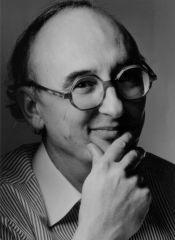
Marq de Villiers
Marq de Villiers

Marq de Villiers is a renowned South African writer, known for his extensive travel literature and adventure stories. Born in 1940, he has always been curious about the world, which fueled his passion for becoming a writer. more

You May Also Like

“Perhaps one of the most meaningful ways to sense the impact of the environmental crisis is to confront the question which is always asked about Lake Erie: how can we restore it? I believe the only valid answer is that no one knows. For it should be clear that even if overnight all of the pollutants now pouring into Lake Erie were stopped, there would still remain the problem of the accumulated mass of pollutants in the lake bottom.”

“Although the United States has made tremendous progress cleaning up its water by removing billions of pounds of pollutants and doubling the number of waterways safe for fishing and swimming, a majority of Americans live within 10 miles of a polluted lake, river, stream or coastal area.”

“The good news about fresh water is that, even after accounting for the larger volume of water that is unavailable to people from the hydrologic cycle, there is enough on a global scale to support current and anticipated populations on a sustainable basis... Three essential goals are dependable and safe supplies for people, protection and management of the environmental systems through which water moves, and efficient water use. Meeting these goals will require that fresh water not continue to be treated as a free good or as the principal means for disposing of human and industrial wastes.”

“We can at least see that the question is asked, and asked on the basis of a clear recognition that there is no way of manipulating our environment that is without cost or consequence - and thus also of a recognition that we are inextricably bound up with the destiny of our world. There is no guarantee that the world we live in will "tolerate" us indefinitely if we prove ourselves unable to live within its constraints.”

“The wrecking ball is characteristic of our way with materials. We 'cannot afford' to log a forest selectively, to mine without destroying topography, or to farm without catastrophic soil erosion. A production-oriented economy can indeed live in this way, but only so long as production lasts.”

“A sustainable economy represents nothing less than a higher social order one as concerned with future generations as with our own, and more focused on the health of the planet and the poor than on material acquisitions and military might. While it is a fundamentally new endeavor, with many uncertainties, it is far less risky than continuing with business as usual.”

“Although population and consumption are societal issues, technology is the business of business. If economic activity must increase tenfold over what it is today to support a population nearly double its current size, then technology will have to reduce its impact twenty-fold merely to keep the planet at its current levels of environmental impact. For example, to stabilize the climate we may have to reduce real carbon emissions by as much as 80 percent, while simultaneously growing the world economy by an order of magnitude.”

“For those who believe that ecological disaster will somehow be averted, it must also be clear that, over the next decade or so, sustainable development will constitute one of the biggest opportunities in the history of commerce. And innovation will be the name of the game.”