Quotessence
Home / Quotes / Quote by Stuart L. Hart

Quote by Stuart L. Hart

“Although population and consumption are societal issues, technology is the business of business. If economic activity must increase tenfold over what it is today to support a population nearly double its current size, then technology will have to reduce its impact twenty-fold merely to keep the planet at its current levels of environmental impact. For example, to stabilize the climate we may have to reduce real carbon emissions by as much as 80 percent, while simultaneously growing the world economy by an order of magnitude.”

Quote by Stuart L. Hart

Work

Capitalism at the Crossroads: Next Generation Business Strategies for a Post-Crisis World

Capitalism at the Crossroads delves into the challenges and opportunities facing businesses in a post-economic crisis era. It examines how companies can adopt new strategies that promote sustainability and ethical practices, contributing to long-term economic stability and societal well-being. more

Author
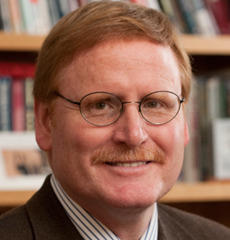
Stuart L. Hart
Stuart L. Hart

Stuart L. Hart is a renowned academic researcher, focusing on corporate social responsibility and sustainable development. His work has had a profound impact on the global business community. more

You May Also Like

“For those who believe that ecological disaster will somehow be averted, it must also be clear that, over the next decade or so, sustainable development will constitute one of the biggest opportunities in the history of commerce. And innovation will be the name of the game.”

“Because by definition they lack any sense of mutuality or wholeness, our specializations subsist on conflict with one another. The rule is never to cooperate, but rather to follow one's own interest as far as possible. Checks and balances are all applied externally, by opposition, never by self-restraint. Labor, management, the military, the government, etc., never forbear until their excesses arouse enough opposition to force them to do so.”

“Because the global ecosystem is a connected whole, in which nothing can be gained or lost and which is not subject to over-all improvement, anything extracted from it by human effort must be replaced. Payment of this price cannot be avoided; it can only be delayed. The present environmental crisis is a warning that we have delayed nearly too long.”

“But we can do nothing for the human future that we will not do for the human present. For the amelioration of the future condition of our kind we must look, not to the wealth or the genius of the coming generations, but to the quality of the disciplines and attitudes that we are preparing now for their use.”

“Can we disregard the growing phenomenon of "environmental refugees", people who are forced by the degradation of their natural habitat to forsake it - and often their possessions as well - in order to face the dangers and uncertainties of forced displacement? Can we remain impassive in the face of actual and potential conflicts involving access to natural resources? All these are issues with a profound impact on the exercise of human rights, such as the right to life, food, health and development.”

“Capitalism rules worldwide, and a society whose economic fabric depends on constant growth requires that its citizens have ever-expanding needs and wants... In the West, it will take one with soul force equal to Gandhi's to change the prevailing dogma of ever increasing GNP. We may be forced to change our profligate ways some day, when the soil is depleted, the aquifers drained, the icecaps melted, and all the oil wells pumped dry. But the crisis will wait another fifty years or so; we'll leave those problems to a generation yet unborn.”

“Certain elements of today's ecological crisis reveal its moral character. First among these is the indiscriminate application of advances in science and technology. Many recent discoveries have brought undeniable benefits to humanity. Indeed, they demonstrate the nobility of the human vocation to participate responsibly in God's creative action in the world. Unfortunately, it is now clear that the application of these discoveries in the fields of industry and agriculture have produced harmful long-term effects.”