Quotessence
Home / Quotes / Quote by Philip Yancey

Quote by Philip Yancey

“Capitalism rules worldwide, and a society whose economic fabric depends on constant growth requires that its citizens have ever-expanding needs and wants... In the West, it will take one with soul force equal to Gandhi's to change the prevailing dogma of ever increasing GNP. We may be forced to change our profligate ways some day, when the soil is depleted, the aquifers drained, the icecaps melted, and all the oil wells pumped dry. But the crisis will wait another fifty years or so; we'll leave those problems to a generation yet unborn.”

Quote by Philip Yancey

Author
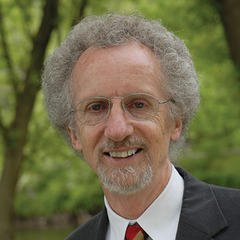
Philip Yancey
Philip Yancey

Philip Yancey (born 1949) is one of the most influential contemporary Christian authors in the United States. He is widely known for his profound explorations of faith, suffering, and grace, blending personal experience, theological reflection, and literary narrative. His bestselling books, including Where Is God When It Hurts?, What's So Amazing About Grace?, and The Jesus I Never Knew, have sold over 15 million copies worldwide and been translated into dozens of languages. Yancey served as an editor for Christianity Today and has written for numerous publications. His honest, thoughtful, and accessible writing style has deeply impacted millions of readers, inviting both believers and skeptics to engage with the complexities of faith. more

You May Also Like

“Certain elements of today's ecological crisis reveal its moral character. First among these is the indiscriminate application of advances in science and technology. Many recent discoveries have brought undeniable benefits to humanity. Indeed, they demonstrate the nobility of the human vocation to participate responsibly in God's creative action in the world. Unfortunately, it is now clear that the application of these discoveries in the fields of industry and agriculture have produced harmful long-term effects.”

“The gradual depletion of the ozone layer and the related "greenhouse effect" has now reached crisis proportions as a consequence of industrial growth, massive urban concentrations and vastly increased energy needs. Industrial waste, the burning of fossil fuels, unrestricted deforestation, the use of certain types of herbicides, coolants and propellants: all of these are known to harm the atmosphere and environment.”

“Christian people should surely have been in the vanguard of the movement for environmental responsibility, because of our doctrines of creation and stewardship. Did God make the world? Does he sustain it? Has he committed its resources to our care? His personal concern for his own creation should be sufficient to inspire us to be equally concerned.”

“Despite its protests to the contrary, modern Christianity has become willy-nilly the religion of the state and the economic status quo. Because it has been so exclusively dedicated to incanting anemic souls into Heaven, it has been made the tool of much earthly villainy. It has, for the most part, stood silently by while a predatory economy has ravaged the world, destroyed its natural beauty and health, divided and plundered its human communities and households.”

“But in its de facto alliance with Caesar, Christianity connives directly in the murder of Creation. For in these days, Caesar is no longer a mere destroyer of armies, cities, and nations. He is a contradicter of the fundamental miracle of life.”

“Entranced by promises of a material paradise of limitless luxury, humanity has too long ignored the mismatch between the imperatives of our existence as living beings on a finite planet and the imperatives of the institutions of money that chart our path to the future. Created to build colonial empires in service to kings, global corporations are ill suited to the task of building just, sustainable, and compassionate civil societies that nurture sufficiency, partnership, and respect for the whole of life.”

“To put it bluntly, we now need to reverse course. We need more highly skilled small farmers in more places all across America - not as a matter of nostalgia for the agrarian past but as a matter of national security. For nations that lose the ability to substantially feed themselves will find themselves as gravely compromised in their international dealings as nations that depend on foreign sources of oil presently do. But while there are alternatives to oil, there are no alternatives to food.”