Quotessence
Home / Quotes / Quote by Pope John Paul II

Quote by Pope John Paul II

“The gradual depletion of the ozone layer and the related "greenhouse effect" has now reached crisis proportions as a consequence of industrial growth, massive urban concentrations and vastly increased energy needs. Industrial waste, the burning of fossil fuels, unrestricted deforestation, the use of certain types of herbicides, coolants and propellants: all of these are known to harm the atmosphere and environment.”

Quote by Pope John Paul II

Author
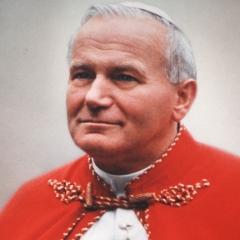
Pope John Paul II
Pope John Paul II

Pope John Paul II, born on May 18, 1920, and died on April 2, 2005, was the 266th Pope of the Roman Catholic Church and one of the longest-reigning popes in history. During his papacy from 1978 to 2005, he was dedicated to promoting world peace and unity, advancing church reform, and visiting numerous countries and regions. more

You May Also Like

“Christian people should surely have been in the vanguard of the movement for environmental responsibility, because of our doctrines of creation and stewardship. Did God make the world? Does he sustain it? Has he committed its resources to our care? His personal concern for his own creation should be sufficient to inspire us to be equally concerned.”

“Despite its protests to the contrary, modern Christianity has become willy-nilly the religion of the state and the economic status quo. Because it has been so exclusively dedicated to incanting anemic souls into Heaven, it has been made the tool of much earthly villainy. It has, for the most part, stood silently by while a predatory economy has ravaged the world, destroyed its natural beauty and health, divided and plundered its human communities and households.”

“But in its de facto alliance with Caesar, Christianity connives directly in the murder of Creation. For in these days, Caesar is no longer a mere destroyer of armies, cities, and nations. He is a contradicter of the fundamental miracle of life.”

“Entranced by promises of a material paradise of limitless luxury, humanity has too long ignored the mismatch between the imperatives of our existence as living beings on a finite planet and the imperatives of the institutions of money that chart our path to the future. Created to build colonial empires in service to kings, global corporations are ill suited to the task of building just, sustainable, and compassionate civil societies that nurture sufficiency, partnership, and respect for the whole of life.”

“To put it bluntly, we now need to reverse course. We need more highly skilled small farmers in more places all across America - not as a matter of nostalgia for the agrarian past but as a matter of national security. For nations that lose the ability to substantially feed themselves will find themselves as gravely compromised in their international dealings as nations that depend on foreign sources of oil presently do. But while there are alternatives to oil, there are no alternatives to food.”

“For three decades and longer we have been developing the ideas, science, and technological wherewithal to build a sustainable society. The public knows of these things only in fragments, but not as a coherent and practical agenda indeed the only practical course available. That is our fault and we should start now to put a positive agenda before the public that includes the human and economic advantages of better technology, integrated planning, coherent purposes, and foresight.”

“Graciousness, courtesy, compassion-this is hesed. Hesed is a quality that extends even to the animals and the land. The sabbath rest principle of Hebrew law included the needs of the livestock (Exod. 23:12). After seven years of planting and harvesting, the land itself needed "a year of complete rest" (Lev. 25:5). Even the soil of the vineyards was not to be overtaxed by planting other crops between the rows (Deut. 22:9). The oxen that trod out the grain were not to be muzzled so that they could eat while they worked (Deut. 25:4). And so on.”