Quotessence
Home / Quotes / Quote by Samuel Johnson

Quote by Samuel Johnson

“It was the maxim, I think, of Alphonsus of Aragon, that dead counsellors are safest. The grave puts an end to flattery and artifice, and the information we receive from books is pure from interest, fear, and ambition. Dead counsellors are likewise most instructive, because they are heard with patience and with reverence.”

Quote by Samuel Johnson

Work

The Rambler

The Rambler is a collection of periodical essays written by Samuel Johnson, published twice weekly between 1750 and 1752. The essays cover a wide range of topics, including ethics, philosophy, literary criticism, and observations on daily life, often presented through fictional characters and allegorical narratives. Johnson's prose is characterized by its moral seriousness, rhetorical elegance, and deep psychological insight, aiming to instruct and improve readers while addressing universal human concerns such as ambition, vanity, and the pursuit of happiness. The work is considered a landmark in English essay writing and a key example of 18th-century moral literature. more
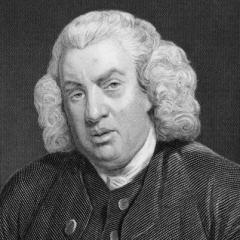
Author

Samuel Johnson
Samuel Johnson

Samuel Johnson was an English writer, poet, and lexicographer, renowned for his comprehensive English dictionary, 'A Dictionary of the English Language', published in 1755. His distinctive writing style and wit have cemented his place as a significant figure in the history of English literature. more

You May Also Like

“Vanity is so frequently the apparent motive of advice, that we, for the most part, summon our powers to oppose it without any very accurate inquiry whether it is right.”

“Affectation is to be always distinguished from hypocrisy as being the art of counterfeiting those qualities, which we might with innocence and safety, be known to want. Hypocrisy is the necessary burden of villainy; affectation part of the chosen trappings of folly.”

“Among the numerous stratagems by which pride endeavors to recommend folly to regard, there is scarcely one that meets with less success than affectation, or a perpetual disguise of the real character by fictitious appearances.”

“There is nothing against which an old man should be so much upon his guard as putting himself to nurse.”