Quotessence
Home / Quotes / Quote by Atul Gawande

Quote by Atul Gawande

“In many ways, the effort to study philosophy was my rebellion away from medicine. I'm the son of two Indian immigrant physicians, so the natural path for me would have been to become a doctor. I ended up doing the master's degree at Oxford in politics, philosophy, and economics while already having a seat in medical school. I was keeping that as my escape hatch. But my hope was that I might become a philosopher or something else entirely.”

Quote by Atul Gawande

Author
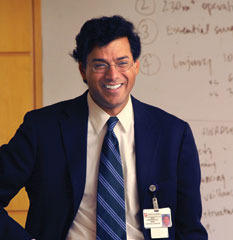
Atul Gawande
Atul Gawande

Atul Gawande is a renowned American surgeon and writer. Born on November 5, 1965, in Mumbai, India, he immigrated to the United States. Gawande is known for his expertise in surgery and his profound insights into the healthcare system. His writings cover a range of topics from surgical techniques to medical ethics, and have been well-received by readers. more

You May Also Like

“After readinf some essay on the nature of human fallibility, I was very aware that we are the recipients of a huge amount of discovery over the last century. Medicine exemplifies this. And that has transitioned us from a world in which people's lives were mostly governed by ignorance to one that's constrained by ineptitude. A century ago, we didn't know, for instance, what diseases afflicted us, what their nature really was, or what to do about them. And that has changed.”

“One of the reasons people might be fallible, why we might fail to do what we try to do isignorance, that we have a limited understanding of the laws of the world - the physical laws that govern the world and of all the particulars of the world upon which those laws work. And then there's ineptitude, meaning that the knowledge is available, but individuals fail to apply it correctly. The third source is "necessary fallibility." That is, we're never going to be omniscient, there is some knowledge that we will simply never achieve, and there are limits to what we will be able to do.”

“I talked to over two hundred patients and family members about their experiences with aging, serious illnesses, and the big unfixables. But I also spoke with scores of physicians, and especially geriatricians, palliative care doctors, hospice nurses, and nursing home workers. The biggest thing I found was that when these clinicians were at their best, they were recognizing that people had priorities besides merely living longer. The most important and reliable way that we can understand what people's priorities are, besides just living longer, is to simply ask. And we don't ask.”

“Once you start to ask patients about their priorities, you discover what they're living for. Once you uncover that, it helps you, as a doctor, decide what to fight for. And when we do that, we often end up identifying limits to the kind of care that people want. One's assumption is that these people are going to live shorter lives, but what we're doing is protecting quality of life. In doing so, you sometimes end up helping people live longer. Certainly, you help people live better days and with more purpose in their lives.”

“I realized that for many people attending a reading is like watching television at the end of a long day. They don't want to be sad but to laugh. Chances are they'll pick the sitcoms over the horror movies. So I learned that, while one's larger body of fiction can have quite a bit of sadness and conflict and tragedy in it , in a reading environment, the average audience member seems able to tolerate only a little bit of sadness. They'd much rather the reading be sexy, funny, and witty. Life is hard these days. There's more than enough sadness in the world, so I can't blame them.”

“I think comedy is difficult, and I'm amazed so many people want to do it. I'll be buying jeans and somebody will say, "I'm a comedian" - the guy selling you the jeans. The desire to be a comedian is weird. I found it weird myself to want to be one; I was a schoolboy when I wanted to be one but I didn't know how to do it. That was 50 years ago, so times have changed greatly. There seems to be a long line of people desperate to do it and most of them are quite good.”