“History will also give occasion to expatiate on the advantage of civil orders and constitutions; how men and their properties are protected by joining in societies and establishing government; their industry encouraged and rewarded, arts invented, and life made more comfortable; the advantages of liberty, mischiefs of licentiousness, benefits arising from good laws and a due execution of justice. Thus may the first principles of sound politics be fixed in the minds of youth.”
Quote by Benjamin Franklin
Work
A Benjamin Franklin Reader
This reader includes a selection of Franklin's letters, essays, and other works, showcasing his wit, wisdom, and contributions to the fields of science, politics, and philosophy. more
Author
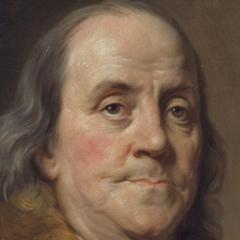
Benjamin Franklin
Benjamin Franklin was a prominent figure in American history, serving as one of the Founding Fathers of the United States. He was a statesman, scientist, inventor, and writer, born on January 17, 1706, and died on April 17, 1790. Franklin is renowned for his contributions to electricity, his support for the American colonial independence movement, and his successful diplomatic efforts in France. more
You May Also Like
Source: The Life of Benjamin Franklin: Containing the Autobiography, with Notes and a Continuation
“Seek truth while you are young, for if you do not, it will later escape your grasp”
“Give me your four year olds, and in a generation I will build a socialist state.”