Quotessence
Home / Quotes / Quote by Karl Jaspers

Quote by Karl Jaspers

“On the question of the world as a whole, science founders. For scientific knowledge the world lies in fragments, the more so the more precise our scientific knowledge becomes.”

Quote by Karl Jaspers

Author
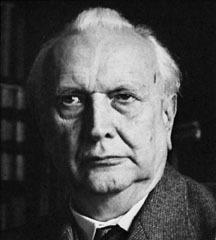
Karl Jaspers
Karl Jaspers

Karl Jaspers was a prominent German psychiatrist and philosopher, born on February 23, 1883, in Hamburg, Germany, and died on February 26, 1969. He had a profound impact on the fields of psychiatry and philosophy with his unique philosophical perspective and theories on mental illness. more

You May Also Like

“When some Republican governors asked to try new ways to put people on welfare back to work, the Obama Administration said they would only do it if they had a credible plan to increase employment by 20%. You hear that? More work. So the claim that President Obama weakened welfare reform's work requirement is just not true.”

“Science is teaching man to know and reverence truth, and to believe that only so far as he knows and loves it can he live worthily on earth, and vindicate the dignity of his spirit.”

“Scientific modes of thought cannot be developed and become generally accepted unless people renounce their primary, unreflecting, and spontaneous attempt to understand all their experience in terms of its purpose and meaning for themselves. The development that led to more adequate knowledge and increasing control of nature was therefore, considered from one aspect, also a development toward greater self-control by men.”

“The first thing the reasonable man must do is to be content with a very little knowledge and a very great deal of ignorance. The second thing he must do is to make the utmost possible use of the knowledge he has and not waste his energy crying for the moon. The third thing he must do is try and see clearly where his knowledge ends and his ignorance begins.”

“The law is this: that each of our leading conceptions-each branch of our knowledge-passes successively through three different theoretical conditions: the Theological, or fictitious: the Metaphysical, or abstract; and the Scientific, or positive.”

“The question whether atoms exist or not... belongs rather to metaphysics. In chemistry we have only to decide whether the assumption of atoms is an hypothesis adapted to the explanation of chemical phenomena... whether a further development of the atomic hypothesis promises to advance our knowledge of the mechanism of chemical phenomena... I rather expect that we shall some day find, for what we now call atoms, a mathematico-mechanical explanation, which will render an account of atomic weight, of atomicity, and of numerous other properties of the so-called atoms.”