Quotessence
Home / Quotes / Quote by Albert Camus

Quote by Albert Camus

“C'est un nœud douloureux et exalté, mille chose s'y mêlent. Alors j'attends que cela cesse. C'est ce que je fais toujours, d'ailleurs et j'ai tort de te dire tout cela. Mais à qui le dirais-je, dans le monde entier. Je t'attends, j'attends l'apaisement du soir, j'attends notre heure, la lumière oblique, cette pause entre le jour et la nuit. La paix viendra, sûrement. Mais je n'imagine pas d'autre paix que celle de nos deux corps liés, de nos regards livrés l'un à l'autre - le n'ai plus d'autre patrie que toi. Attends-moi, mon chéri. Écris-moi, écris tout ce que tu peux. Tant de mers me séparent de toi. Où te chercher ? Où t'atteindre ? Comment fuérir sans toi la peine qui m'étouffe ? Je t'embrasse, mon seul amour, je te serre contre moi. Les jours passent, mais si lentement, comme des nuits d'insomnie, et je ne peux plus me supporter. Écris.”

Quote by Albert Camus

Author
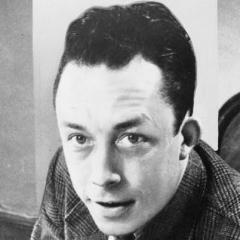
Albert Camus
Albert Camus

Albert Camus was a French author and philosopher, born on November 7, 1913, and died on January 4, 1960. Known for his unique existentialist philosophy and profound insights into human suffering, Camus' works include 'The Stranger', 'The Plague', and 'The Myth of Sisyphus', which have had a profound impact on 20th-century literature. more

You May Also Like

“Sur ma tombe, comme dans ma vie, il n'y aura pas de phrase grandiloquente. Sur la dalle de mon tombeau, on ne devra lire que deux syllabes: «zwi-zwi». C'est le cri des mésanges charbonnières que j'imite si bien qu'elles accourent aussitôt. Et imaginez que dans ce zwi-zwi qui d'habitude brillait comme une aiguille d'acier et rendait un son très clair et très grêle, il y a depuis quelques jours un trille tout à fait menu, une minuscule note de poitrine. Et savez-vous, mademoiselle Jacob, ce que cela signifie ? C'est le premier léger mouvement du printemps à venir : malgré la neige, le froid et la solitude, nous croyons, les mésanges charbonnières et moi, à la venue du printemps ! Et si, par trop d'impatience, il ne devait pas m'être donné de vivre ce printemps, n'oubliez pas que sur la dalle de ma tombe on ne doit lire rien d'autre que «zwi-zwi». 7 février 1917, prison de Wronke À Mathilde Jacob”

“Spices from the Far East- clove and sandalwood and saffron- had drifted through the building's veins from the perfumery next door, infusing the satchel with a hint of faraway places. Open me... The woman in the white gloves unlatched the dull silver buckle and the satchel held its breath. Open me, open me, open me... She pushed back its leather strap and for the first time in over a century light swept into the satchel's dark corners. An onslaught of memories- fragmented, confused- arrived with it: a bell tinkling above the door at W. Simms & Son; the swish of a young woman's skirts; the thud of horses' hooves; the smell of fresh paint and turpentine; heat, lust, whispering. Gaslight in railway stations; a long, winding river; the wheat fragrance of summer-”

“It was a delicate silver frame, small enough to fit within her hand, containing a photograph of a woman. She was young, with long hair, light but not blond, half of which was wound into a loose knot on the top of her head; her gaze was direct, her chin slightly lifted, her cheekbones high. Her lips were set in an attitude of intelligent engagement, perhaps even defiance. Elodie felt a familiar stirring of anticipation as she took in the sepia tones, the promise of a life awaiting rediscovery. The woman's dress was looser than might be expected for the period. White fabric draped over her shoulders, and the neckline fell in a V. The sleeves were sheer and billowed, and had been pushed to the elbow on one arm. Her wrist was slender, the hand on her hip accentuating the indentation of her waist. The treatment was as unusual as the subject, for the woman wasn't posed inside on a settee or against a scenic curtain, as one might expect in a Victorian portrait. She was outside, surrounded by dense greenery, a setting that spoke of movement and life. The light was diffuse, the effect intoxicating.”

“The woman glanced up at the stars before lowering to her knees in the sand. She bowed her head, letting the desert grains cover her skirts and run through fingers as she murmured in the old, forgotten language--- the one Agrabah would always respond to. And the ground began to shake. Sand whipped through the air, swirling around the woman, he used her cloak as a shield against the onslaught. The grains spun before her, funneling into a tornado, until every last piece came together to form an unmistakable shape: tigers head, with sharp sandstone for jaws and teeth and a gaping mouth lit by fire. The woman stepped forward and the tiger opened its mouth wider, revealing a glowing staircase within that beckoned her closer. Welcome back, old friend.”

“Ben ducked beneath the arbor and paused by the fishpond when a memory crept upon him like a shadow. This was the spot where Alice had first read to him from her manuscript. He could still hear her voice, as if it had somehow been captured by the leaves around them and was being played back now, just for him, like a gramophone recording. "I've had a brilliant idea," he heard her say, so young and innocent, so full of joy. "I've been working on it all morning and I don't like to boast, but I'm quite sure it's going to be my best yet." "Is it?" Ben had said with a smile. He'd been teasing, but Alice had been far too excited to notice. She'd leapt on with telling him about her idea, the plot, the characters, the twist, and the intensity of her focus- her passion- changed her face completely, bringing an animated beauty to her features. He hadn't noticed she was beautiful until she spoke to him of her stories. Her cheeks flushed and her eyes shone with intelligence. And she was 'very' clever. It took a certain kind of clever to figure out a puzzle- to look ahead and see through all the possible scenarios, to be so strategic. Ben didn't have that kind of brain. In the beginning he'd simply enjoyed her enthusiasm, the indulgence of being told a story while he worked, the chance to bat ideas back and forth, which was so much like play. She made him feel young, he supposed; her youthful preoccupation with her work, with the very moment they were in, was intoxicating. It made his adult worries disappear.”