Quotessence
Home / Quotes / Quote by Alison Uttley

Quote by Alison Uttley

Work

The Farm on the Hill

Browse quotes and source details for this work. more
Author

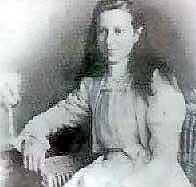
Alison Uttley
Alison Uttley

Alison Uttley was a British writer renowned for her children's literature. Her works are characterized by their delicate emotions and rich imagination, making them popular with readers. more

You May Also Like

“The concept of divine revelation was central to Augustine's epistemology, or theory of knowledge. The metaphor of light is instructive. In our present earthly state we are equipped with the faculty of sight. We have eyes, optic nerves, and so forth- all the equipment needed for sight. But a man with the keenest eyesight can see nothing if he is locked in a totally dark room. So just as an external source of light is needed for seeing, so an external revelation from God is needed for knowing. When Augustine speaks of revelation, he is not speaking of Biblical revelation alone. He is also concerned with "general" or "natural" revelation. Not only are the truths in Scripture dependent on God's revelation, but all truth, including scientific truth, is dependent on divine revelation. This is why Augustine encouraged students to learn as much as possible about as many things as possible. For him, all truth is God's truth, and when one encounters truth, one encounters the God whose truth it is.”

“Seeing is the property of our eyes. But we also use this word in other senses, when we apply the power of vision to knowledge generally. We do not say 'Hear how that flashes', or 'Smell how bright that is', or 'Taste how that shines' or 'Touch how that gleams'. Of all these things we say 'see'. But we say not only 'See how that light shines', which only the eyes can perceive, but also 'See how that sounds, see what smells, see what tastes, see how hard that is'. So the general experience of the senses is the lust, as scripture says, of the eyes, because seeing is a function in which eyes hold the first place but other senses claim the word for themselves by analogy when they are exploring any department of knowledge.”

“What is time? Who can explain this easily and briefly? Who can comprehend this even in thought so as to articulate the answer in words? Yet what do we speak of, in our familiar everyday conversation, more than of time? We surely know what we mean when we speak of it. We also know what is meant when we hear someone else talking about it. What then is time? Provided that no one asks me, I know. If I want to explain it to an inquirer, I do not know. But I confidently affirm myself to know that if nothing passes away, there is no past time, and if nothing arrives, there is no future time, and if nothing existed there would be no present time. Take the two tenses, past and future. How can they 'be' when the past is not now present and the future is not yet present? Yet if the present were always present, it would not pass into the past: it would not be time but eternity. If then, in order to be time at all, the present is so made that it passes into the past, how can we say that this present also 'is'? The cause of its being is that it will cease to be. So indeed we cannot truly say that time exists except in the sense that it tends toward non-existence.”

“...we have chosen to speak of spirituality ultimately as the way in which we live out our response to God. Unless we find this personal, transformational meaning in its fullest sense, the struggle for wholeness will remain unresolved. As Augustine put it in the first paragraph of his Confessions, 'God created us for a relationship with him and our hearts are restless until we find our rest in God.”