Quotessence
Home / Quotes / Quote by Arthur Schopenhauer

Quote by Arthur Schopenhauer

Work

On the Suffering of the World

This book delves into the profound and varied aspects of human suffering, examining its origins, manifestations, and implications across different cultures and societies. more

Author
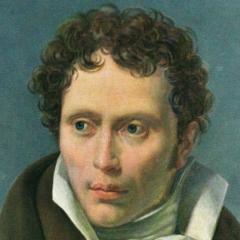
Arthur Schopenhauer
Arthur Schopenhauer

Arthur Schopenhauer was a prominent German philosopher born on February 22, 1788, and died on September 21, 1860. He is one of the most important figures in 19th-century German philosophy and is known for his unique pessimistic philosophical ideas. more

You May Also Like

“There is no ongoing spiritual life without this process of letting go. At the precise point where we refuse, growth stops. If we hold tightly to anything given to us, unwilling to let it go when the time comes to let it go or unwilling to allow it to be used as the Giver means it to be used, we stunt the growth of the soul. It is easy to make a mistake here, “If God gave it to me,” we say, “its mine. I can do what I want with it.” No. The truth is that it is ours to thank Him for and ours to offer back to Him, ours to relinquish, ours to lose, ours to let go of – if we want to find our true selves, if we want real life, if our hearts are set on glory.”

“— This world is full of trouble, umfundisi. — Who knows it better? — Yet you believe? Kumalo looked at him under the light of the lamp. I believe, he said, but I have learned that it is a secret. Pain and suffering, they are a secret. Kindness and love, they are a secret. But I have learned that kindness and love can pay for pain and suffering. There is my wife, and you, my friend, and these people who welcomed me, and the child who is so eager to be with us here in Ndotsheni – so in my suffering I can believe. — I have never thought that a Christian would be free of suffering, umfundisi. For our Lord suffered. And I come to believe that he suffered, not to save us from suffering, but to teach us how to bear suffering. For he knew that there is no life without suffering. Kumalo looked at his friend with joy. You are a preacher, he said.”

“Suffering is the condition on which we live. And when it comes you know it. You know it as the truth. Of course it's right to cure diseases, to prevent hunger and injustice, as the social organism does. But no society can change the nature of its existence. We can't prevent suffering. This pain and that pain, yes, but not Pain. A society can only relieve social suffering - unnecessary suffering. The rest remains. The root, the reality.”