Quotessence
Home / Quotes / Quote by Wilkie Collins

Quote by Wilkie Collins

“Some people in my position would now have felt rather crestfallen, and would have begun to think that they had made a very foolish mistake. Not the faintest misgiving of any kind troubled me. I did not feel in the slightest degree depreciated in my own estimation. And even now, after a lapse of three hours, my mind remains, I am happy to say, in the same calm and hopeful condition.”

Quote by Wilkie Collins

Work

Biter Bit and Other Stories

Browse quotes and source details for this work. more

Author
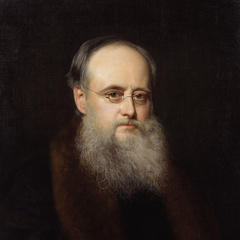
Wilkie Collins
Wilkie Collins

Wilkie Collins, born on January 8, 1824, and died on September 23, 1889, was a renowned British novelist. He is best known for his suspense and detective novels, being one of the pioneers of this literary genre. His works, such as 'The Woman in White' and 'The Moonstone', are particularly famous. more

You May Also Like

“Ah, among the unhappiest blunders a man makes is this, that he childishly misjudges the value of the gifts that nature bestows on him most easily, and, contrariwise, considers most precious the endowments that come hardest. The precious stone buried in the earth's entrails, the pearl hidden in the ocean depths—these are what people regard as the greatest treasures; but they would look down on them if nature strewed them underfoot like pebbles and seashells. We are casual about our own excellences; we try to deceive ourselves about out weaknesses so long that we end up taking them for eminent virtues. Once, after a concert by Paganini, when I confronted the master with passionate praises for his violin playing, he interrupted me with these words: 'But today how did you like my bows, my genuflections?”

“Most of our failures in love involve self-deception. The other was not all that excited about the relationship, but we projected our enthusiasm onto the other and charged ahead. Or the other was hopeful, but we were cynical and attributed that same motivation to the other. We can ignore the needs of an other because they are not impulses we feel; we can ignore warning signs because they do not fit into our vision of what should be.”

“Self-deception is the worst kind of deception and is a dangerous message to send to our kids. They will learn to do the same.”

“...yes, we were pretty good boys. After all, we were the future middle class. "...By then some of us had behaved badly. There were illegitimate children, petty theft, various forms of betrayal. But, even so, I think we would have called ourselves basically good. And if a few of us had gotten into trouble, we could point to complicated circumstances, weaknesses, errors of judgement; yet even with these lapses we would still have claimed a certain morality. We were decent, or hoped we were. But where does it change? ... It depends on what you want and how much you want it and how you place yourself in relation to the generally accepted system of morality. You know that old argument that some people have the right to set aside conventional morality because of their superiority or whatever? Clearly, there are people who do terrible things and are able to justify their misconduct by need or superiority or by saying they weren't responsible. But if these things continue and if you're unable to avoid self-deception, then you reach a point where you have to say, No, I am not a good person. I have behaved badly. That is the first admission. The second admission is that I will continue to behave badly.”