“Bowman was aware of some changes in his behavior patterns; it would have been absurd to expect anything else in the circumstances. He could no longer tolerate silence; except when he was sleeping, or talking over the circuit to Earth, he kept the ship's sound system running at almost painful loudness. / At first, needing the companionship of the human voice, he had listened to classical plays--especially the works of Shaw, Ibsen, and Shakespeare--or poetry readings from Discovery's enormous library of recorded sounds. The problems they dealt with, however, seemed so remote, or so easily resolved with a little common sense, that after a while he lost patience with them. / So he switched to opera--usually in Italian or German, so that he was not distracted even by the minimal intellectual content that most operas contained. This phase lasted for two weeks before he realized that the sound of all these superbly trained voices was only exacerbating his loneliness. But what finally ended this cycle was Verdi's Requiem Mass, which he had never heard performed on Earth. The "Dies Irae," roaring with ominous appropriateness through the empty ship, left him completely shattered; and when the trumpets of Doomsday echoed from the heavens, he could endure no more. / Thereafter, he played only instrumental music. He started with the romantic composers, but shed them one by one as their emotional outpourings became too oppressive. Sibelius, Tchaikovsky, Berlioz, lasted a few weeks, Beethoven rather longer. He finally found peace, as so many others had done, in the abstract architecture of Bach, occasionally ornamented with Mozart. / And so Discovery drove on toward Saturn, as often as not pulsating with the cool music of the harpsichord, the frozen thoughts of a brain that had been dust for twice a hundred years.”
Quote by Arthur C. Clarke
Work
2001: A Space Odyssey
This seminal work by Arthur C. Clarke intertwines the story of a manned mission to Jupiter with philosophical and scientific speculation about the nature of humanity and the cosmos. more
Author
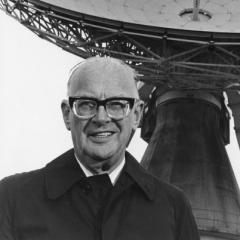
Arthur C. Clarke
Arthur C. Clarke was a British science fiction author, writer, and science popularizer. Known for his science fiction novels and predictions about future technology, his most famous works include '2001: A Space Odyssey' and 'Rendezvous with Rama'. Clarke's science fiction novels are not only literarily valuable but also had a profound impact on science fiction films and television. more
You May Also Like
Source: The Light in the Heart
“I leave behind this hurricane of f***ing lies”
Source: American Idiot
Source: The Winner's Curse
Source: Ultraviolet
“You are the sun, and I'm the moon. In your shadow I can shine.”
Source: Just Listen
Source: The Light in the Heart
Source: The Magic Strings of Frankie Presto