Quotessence
Home / Quotes / Quote by Deena Metzger

Quote by Deena Metzger

“Understanding the Way of Story as a sacred pattern and a living event. Story can reveal a spiritual path and or the way to healing. Stories become the foundation of health, peacebuilding and vision. Learning to listen, to recognize, to understand and attend the teachings and revelations of the Stories we have been given to live guides us toward the 5th world. Our individual stories, when carefully attended, can reveal each person’s particular path of healing and transformation. Even illness is a story that can lead us to our own and to community healing. Learning to recognize the Story that we or another is living can be a worthy life work.”

Quote by Deena Metzger

Author
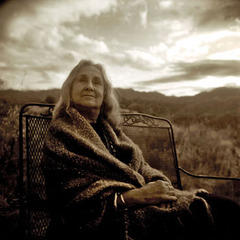
Deena Metzger
Deena Metzger

Deena Metzger is an American writer born on September 17, 1936. Her works encompass poetry, fiction, and prose, known for their profound individualism and focus on social justice. more

You May Also Like

“I have seen articles written by the bishops' conference of Holland about means of salvation in non-Christian religions. It is insanity to make that kind of statement. There are no means of salvation outside the Catholic religion and outside our Lord Jesus Christ. There is no salvation outside the Church. It is a dogma of our faith. Why? Because there are no supernatural graces except those that come through the Church.”

“The Message of Fatima had, quite simply, been written out of existence, transformed into slogans of the Adaptation. And in line with this Stalinist Adaptation of the Church there would be censorship of anyone who hearkened to the former understanding of the old terms. In the same letter of February 16, Cardinal Castrillon Hoyos had demanded that Father Gruner "publicly retract" certain opinions in his apostolate's magazine that the Cardinal deemed objectionable. In a Church teeming with heretical literature which has undermined the faith of millions and engendered their souls, Carinal Castrillon Hoyos wished to censor the Fatima Crusader magazine! And why? Because the magazine had dared to criticize, not Catholic teaching on faith and morals, but the prudential decisions of Carinal Sodano and his collaborators - including their press conferences and dinners with the likes of Mikhail Gorbachev, their cozy relations with the schismatic CPA and their attempt to bury the Message of Fatima under of mountain of false interpretation. The treatment of Father Gruner, the Priestly Fraternity of St. Peter, Archbishop Lefebvre, the Society of St. Pius X, and other perceived obstacles to the new orientation of Vatican II illustrates that the post-conciliar epoch presents a situation very much that lamented by St. Basil at the height of the Arian heresy: "Only one offense is now vigorously punished: an accurate observance of our fathers' traditions . . ." Only one offense is now vigorously punished today: an accurate observance of the Church's constant pre-conciliar traditions . . .”

“In the spring of 1969, the sword struck from Rome. Pope Paul VI decreed a new Mass would be instituted. The letter carrying the news pierced the bishop's heart. This was not just a scandal; the preface to the description of the novus ordo missae gave a new definition of the Holy Sacrifice of the Mass that bordered on an unthinkable lapse into heresy. The Great Sacrifice of the Mass became a simple supper. The change in the nature of the sacrament can be understood quickly by simply counting the number of references to "sacrifice" in the Tridentine rite and comparing that number with the number of references in the new Mass. This was not only new; this was the smashing of the ancient ritual of sacrifice and the replacement with a new version.”

“Here, in miniature, is a paradigm of the basic misunderstanding in the post-Vatican II Church. To many of the members of the hierarchy and indeed to the pope himself, the problem is a problem of obedience: "We say you will now do this, now do it. We say will not do this, so don't. Obey!" To thousands of priests and hundred of thousands of faithful around the world, the problem is a problem of dogma and doctrine: "You now say X when the Church has always said Y. How is this possible? Explain!" The fundamental stand of the traditionalists consists in a belief that the changes in the Church represent a clear and distinct break with twenty centuries of teaching and practice. In all sincerity, they ask for clarification and explanation before they will consider abandoning what they have always believed and what they have always done. The 1974 letter from Dom Antonio to Pope Paul VI stated explicitly his doubts concerning the new Mass and certain new ideas from Vatican II and quite humbly requested enlightenment from the pontiff. The response in this case was typical - silence. The only other response such sincere requests receive is the thunderclap "Obey!" Such responses suggest that the authorities are completely unwilling or unable to debate questions of doctrine and dogma, either out of fear or out of the painful recognition that there has indeed been a significant change in the traditional teachings and practices of the Church that cannot be discussed or explained to anyone's satisfaction.”

“The consecration ceremony usually begins with the "mandate", the commission from Rome approving the event. Msgr. Fischer explained that in the absence of a mandate from Pope John Paul II, whose vision of the Church is a vision of the "new Church" under which the faithful have suffered at the hands of Bishops Navarro and Corso, a mandate clearly exists from the popes of Tradition, the Rome of All Time, to insure the salvation of souls. In this clear wish of the Eternal Church, the mandate is given. Next came the interrogation or the examination of the bishop-elect by the consecrator (and two co-consecrators, who always speak all the words of the ceremony simultaneously with the consecrator). The bishop-elect was asked if he would teach the Scriptures to the people, if he would "receive, keep and teach with reverence the traditions of the orthodox fathers," if he would submit to the authority of the Holy Father (a conundrum - it is no longer possible to answer "yes" unreservedly to both the second and third questions; a "yes" answer to question three regarding the current pope requires a "no" answer to question two, since there exists a clear break between the "orthodox Fathers" and the present pope; a "yes" answer to question two requires a qualified "yes" to question three, "yes" insofar as the pope upholds the tradition spoken of in question two, but "no" insofar as he breaks with the "traditions of the orthodox Fathers" - only muddled modernist thought could produce such confusion) . . .”

“We cleave with all our heart and with all our soul, to Catholic Rome, the guardian of the Catholic Faith and to eternal Rome, mistress of wisdom and truth. On the other hand we refuse and have always refused to follow the Rome of the new-Protestant trend clearly manifested throughout Vatican II Council and, later, in all the reforms born out of it. (Doctrinal Declaration of 1974)”

“Now it was during the Council that the enemies of the Church infiltrated her, and their first objective was to demolish and destroy the Mass insofar as they could. you can read the books of Michael Davies, an English Catholic, who has written magnificent works which demonstrate how the liturgical reform of Vatican II closely resemble that produced under Cranmer at the birth of English Protestantism. If one reads the history of that liturgical transformation, made also by Luther, one sees that now it is exactly the same procedure which is being slowly followed and to all appearances, still apparently good and Catholic. But is just that character of the Mass which is sacrificial and redemptive of sim, through the Blood of Our Lord Jesus Christ, which they have removed. They have made of the Mass a simple assembly, one among others, merely presided over by the priest. That is not the Mass! (Jubilee Sermon of September 1979)”

“My dear children, my dear brethren, today is the Feast of the Holy Pope, St. Pius V. We must thank God because he has given this Holy Pope for the Church. You know that it is by this Holy Pope that we now have the Sacrifice of the Mass as the Church, given in the name of Jesus Christ, has given us. And it is very important for the Church to maintain this Rite of the Sacrifice of the Mass as the Holy Pope, Pius V, has given us; to maintain this canonized, true Mass. The Mass is the heart of the Church; it is the heart of your school; it is the heart of the seminary. We thank God today to have this true Rite of the true Catholic Mass, because by this Mass we receive many, many blessings from God and many graces. (Sermon at St. Mary's College, Kansas, May 5, 1982)”

“Why does the Church exist on this earth, if not to propagate the Kingship of Our Lord Jesus Christ, to bring by means of this Kingship Christian civilization, the only visible civilization? There is nothing outside of Our Lord Jesus Christ. St. Peter said it: "Non est in alio aliquo salus. There is no other name on earth given for our salvation but that of Our Lord Jesus Christ." Consequently, if a State is Catholic, if the head of a government is Catholic, if 98% of a population is Catholic, it is the duty of the head of State to refuse the other religions, to allow them merely a certain tolerance, if he cannot do otherwise, but to guard the Faith, the Faith that is the source of the salvation of every soul and, as a result, to contribute to the work of the Church in keeping souls united to Our Lord and of saving them for eternity. That is the role of every Catholic head of a Catholic state; that is what the Church has always taught. (Conference at Barcelona, Spain, December 29, 1975)”