Quotessence
Home / Quotes / Quote by Yevgeny Zamyatin

Quote by Yevgeny Zamyatin

“Darkness. The door into the neighboring room is not quite shut. A strip of light stretches through the crack in the door across the ceiling. People are walking about by lamplight. Something has happened. The strip moves faster and faster and the dark walls move further and further apart, into infinity. This room is London and there are thousands of doors. The lamps dart about and the strips dart across the ceiling. And perhaps it is all delirium... Something had happened. The black sky above London burst into fragments: white triangles, squares and lines - the silent geometric delirium of searchlights. The blinded elephant buses rushed somewhere headlong with their lights extinguished. The distinct patter along the asphalt of belated couples, like a feverish pulse, died away. Everywhere doors slammed and lights were put out. And the city lay deserted, hollow, geometric, swept clean by a sudden plague: silent domes, pyramids, circles, arches, towers, battlements.”

Quote by Yevgeny Zamyatin

Work

Islanders & The Fisher of Men

Browse quotes and source details for this work. more

Author
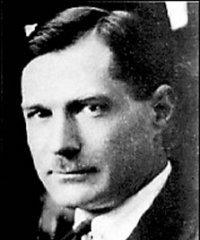
Yevgeny Zamyatin
Yevgeny Zamyatin

Russian author known for his dystopian novel 'We'. Born on February 1, 1884, in Taganrog, Russia, he passed away on March 10, 1937. more

You May Also Like

“The Government set the stage economically by informing everyone that we were in a depression period, with very pointed allusions to the 1930s. The period just prior to our last 'good' war. ... Boiled down, our objective was to make killing and military life seem like adventurous fun, so for our inspiration we went back to the Thirties as well. It was pure serendipity. Inside one of the Scripter offices there was an old copy of Doc Smith's first LENSMAN space opera. It turned out that audiences in the 1970s were more receptive to the sort of things they scoffed at as juvenilia in the 1930s. Our drugs conditioned them to repeat viewings, simultaneously serving the ends of profit and positive reinforcement. The movie we came up with stroked all the correct psychological triggers. The fact that it grossed more money than any film in history at the time proved how on target our approach was.' 'Oh my God... said Jonathan, his mouth stalling the open position. 'Six months afterward we ripped ourselves off and got secondary reinforcement onto television. We pulled a 40 share. The year after that we phased in the video games, experimenting with non-narcotic hypnosis, using electrical pulses, body capacitance, and keying the pleasure centers of the brain with low voltage shocks. Jesus, Jonathan, can you *see* what we've accomplished? In something under half a decade we've programmed an entire generation of warm bodies to go to war for us and love it. They buy what we tell them to buy. Music, movies, whole lifestyles. And they hate who we tell them to. ... It's simple to make our audiences slaver for blood; that past hasn't changed since the days of the Colosseum. We've conditioned a whole population to live on the rim of Apocalypse and love it. They want to kill the enemy, tear his heart out, go to war so their gas bills will go down! They're all primed for just that sort of denouemment, ti satisfy their need for linear storytelling in the fictions that have become their lives! The system perpetuates itself. Our own guinea pigs pay us money to keep the mechanisms grinding away. If you don't believe that, just check out last year's big hit movies... then try to tell me the target demographic audience isn't waiting for marching orders. ("Incident On A Rainy Night In Beverly Hills")”

“The thing people don't understand about an army is its great, unpunctuated wastes of inaction: you have to scavenge for food, you are camped out somewhere with a rising water level because your mad capitaine says so, you are shifted abruptly in the middle of the night into some indefensible position, so you never really sleep, your equipment is defective, the gunners keep causing small unwanted explosions, the crossbowmen are either drunk or praying, the arrows are ordered up but not here yet, and your whole mind is occupied by a seething anxiety that things are going to go badly because il principe, or whatever little worshipfulness is in charge today, is not very good at the basic business of thinking. It didn't take him many winters to get out of fighting and into supply. In Italy, you could always fight in the summer, if you felt like it. If you wanted to go out.”