Quotessence
Home / Quotes / Quote by Randy Shilts

Quote by Randy Shilts

Work

And the Band Played On: Politics, People, and the AIDS Epidemic

Browse quotes and source details for this work. more

Author
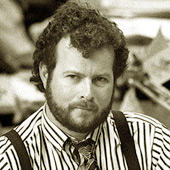
Randy Shilts
Randy Shilts

Randy Shilts was an American journalist renowned for his pioneering work in covering the AIDS epidemic. He is most celebrated for his book 'And the Band Played On,' which offered an extensive examination of the early stages of the epidemic and the response of the U.S. government and medical community. Shilts passed away on February 17, 1994. more

You May Also Like

“I suppose this anger and manipulation was my pseudo-conscious method of giving the system, and all it entailed, the big fat birdie finger. What I failed to realize was that my inward disposition of fuming vindictiveness and self-justification only caused me to rob myself. I was giving myself the middle finger, not them.”

“Voilà bien la famille : même celui qui n'a pas sa place dans le monde, qui n'est ni célèbre ni riche, à qui il n'est venu ni enfants ni idées, et dont le public ne lira le nom que dans sa notice nécrologique, celui-là, en famille, a pourtant sa place attitrée. En famille, on est quelqu'un. Vous n'imaginez pas comme Caroline imite bien Chaplin, ni comme Rudi est irritable. Et quel sens de l'humour, dans toute la famille ! Ce qui, partout ailleurs, n'aurait rien d'humoristique déclenche ici des rires retentissants, on ne saurait dire pourquoi ; c'est drôle, voilà tout, n'est-ce pas l'essentiel en matière d'humour ? Et puis, tous ceux qui ne sont pas de la famille sont bien plus ridicules qu'ils ne s'en doutent. Dieu les a voués à la caricature ; si vous êtes seul au monde, sans attaches, vous pouvez être sûr d'être le summum du ridicule pour les diverses familles qui vous observent. Il est vrai que ces qualités, comme tout, peuvent être vues sous leur angle négatif : la famille a l'esprit plus petit qu'une petite ville. Plus elle est chaleureuse, plus elle se montre dure pour tout ce qui n'est est pas elle, et elle est toujours plus cruelle qu'un être confronté seul à la souffrance du monde. En cantonnant la gloire dans son cercle restreint, où elle est faceil à atteindre (« gloire de la famille »), elle endort l'ambition. Et parce que tous les événements familiaux suscitent une tristesse plus profonde ou une joie plus éclatante qu'ils ne le méritent réellement, parce qu'en famille ce qui n'a rien d'humoristique devient de l'humour, et des peines insignifiantes à l'échelle collective, un malheur personnel, elle est le berceau de toute l'ineptie qui imprègne notre vie publique. Il y aurait encore long à en dire et on l'a dit parfois, mais jamais en des jours comme celui-ci.”

“The greatest book in the world, the Mahabharata, tells us we all have to live and die by our karmic cycle. Thus works the perfect reward-and-punishment, cause-and-effect, code of the universe. We live out in our present life what we wrote out in our last. But the great moral thriller also orders us to rage against karma and its despotic dictates. It teaches us to subvert it. To change it. It tells us we also write out our next lives as we live out our present. The Mahabharata is not a work of religious instruction. It is much greater. It is a work of art. It understands men will always fall in the shifting chasm between the tug of the moral and the lure of the immoral. It is in this shifting space of uncertitude that men become men. Not animals, not gods. It understands truth is relative. That it is defined by context and motive. It encourages the noblest of men - Yudhishtra, Arjuna, Lord Krishna himself - to lie, so that a greater truth may be served. It understands the world is powered by desire. And that desire is an unknowable thing. Desire conjures death, destruction, distress. But also creates love, beauty, art. It is our greatest undoing. And the only reason for all doing. And doing is life. Doing is karma. Thus it forgives even those who desire intemperately. It forgives Duryodhana. The man who desires without pause. The man who precipitates the war to end all wars. It grants him paradise and the admiration of the gods. In the desiring and the doing this most reviled of men fulfils the mandate of man. You must know the world before you are done with it. You must act on desire before you renounce it. There can be no merit in forgoing the not known. The greatest book in the world rescues volition from religion and gives it back to man. Religion is the disciplinarian fantasy of a schoolmaster. The Mahabharata is the joyous song of life of a maestro. In its tales within tales it takes religion for a spin and skins it inside out. Leaves it puzzling over its own poisoned follicles. It gives men the chance to be splendid. Doubt-ridden architects of some small part of their lives. Duryodhanas who can win even as they lose.”