“At the same time there is reason to think that Gandhi, who after all was born in 1869, did not understand the nature of totalitarianism and saw everything in terms of his own struggle against the British government. The important point here is not so much that the British treated him forbearingly as that he was always able to command publicity. As can be seen from the phrase quoted above, he believed in ‘arousing the world’, which is only possible if the world gets a chance to hear what you are doing. It is difficult to see how Gandhi’s methods could be applied in a country where opponents of the regime disappear in the middle of the night and are never heard of again. Without a free press and the right of assembly, it is impossible not merely to appeal to outside opinion, but to bring a mass movement into being, or even to make your intentions known to your adversary. Is there a Gandhi in Russia at this moment? And if there is, what is he accomplishing? The Russian masses could only practise civil disobedience if the same idea happened to occur to all of them simultaneously, and even then, to judge by the history of the Ukraine famine, it would make no difference.”
Quote by George Orwell
Work
Reflections on Gandhi
Browse quotes and source details for this work. more
Author
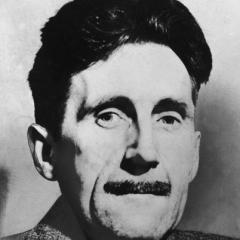
George Orwell
George Orwell, born Eric Arthur Blair, was a British novelist and political critic. Known for his sharp social criticism and profound insights into totalitarianism, Orwell is best remembered for his novels '1984' and 'Animal Farm', which remain influential to this day. more
You May Also Like
Source: Legacy of Love: My Education in the Path of Nonviolence
Source: Down the Line: The Collected Writings of Bayard Rustin
“If engaging in peaceful protests makes you a terrorist, then, yeah, he’s a terrorist.”
Source: Cali the Destroyer
Source: Smashing Statues: The Rise and Fall of America's Public Monuments
Source: Splendid Literarium: A Treasury of Stories, Aphorisms, Poems, and Essays
“We need in every bay and community a group of angelic troublemakers.”
Source: Civil Disobedience