“...all this abstraction is also potentially distancing. We don't see the labor that went into building our railroads or the civilizations that were wiped out in order to clear the land. We don't see the millennia of dinosaurs or plankton that went into our oil, the Chinese repetitive stress injuries that went into our iPhones, or any of the other time-intensive processes we can spend in an instant today. We tend to see math and science as a steady state of facts rather than as the accumulated knowledge of linear traditions. As Korzybski put it, we see further because we "stand on the shoulders" of the previous generation.”
Quote by Douglas Rushkoff
Work
Present Shock: When Everything Happens Now
Browse quotes and source details for this work. more
Author
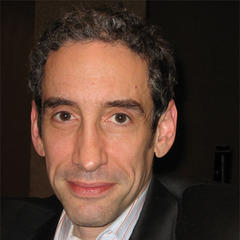
Douglas Rushkoff
Douglas Rushkoff is a writer, media theorist, and cultural critic of the digital age. Born on February 18, 1961, he is renowned for his profound insights into technology, media, and culture. Rushkoff's work covers a wide range of topics from personal technology to global politics, frequently exploring how technology shapes social structures and human behavior. more
You May Also Like
Source: Braiding Sweetgrass: Indigenous Wisdom, Scientific Knowledge, and the Teachings of Plants
Source: Ohio
Source: Not Working
Source: Ask a Queer Chick: A Guide to Sex, Love, and Life for Girls Who Dig Girls
“It's not conversion 'therapy;' it's conversion brainwashing.”
Source: Split: A Memoir of Divorce
“Terror doesn't change people from gay to straight. It just hurts innocent people.”