Quotessence
Home / Quotes / Quote by Julius Evola

Quote by Julius Evola

“​"So it will be appropriate to offer a brief exposition of the subject. We can speak of three factors that led Mussolini to confront the problem of race in 1938. [181] On 5 August 1938, an official document [182] declared, ‘The climate is now ripe for an Italian racism’, for which the Grand Council outlined the fundamental directives the following October. The first legislative provisions ‘for the defence of the Italian race’ were promulgated the following month. Of the three factors, the one that concerned the Hebraic problem was the most incidental. There are few or no references to this problem in Mussolini’s early writings. One can only cite an old article that mentions a well-known theme, that the Hebrew, subjugated and deprived of the usual means to compete directly in the modern world, had recourse to the indirect means constituted by money, finance and intelligence (in the profane sense) to exercise power and for self-affirmation. In addition, in an article from 1919, Mussolini wondered whether Bolshevism, which was supported in its origins by Jewish bankers in London and New York and counted (at that time) numerous Hebrews among its leaders, did not represent ‘Israel’s revenge against the Aryan race’. [183]"​”

Quote by Julius Evola

Work

Fascism Viewed from the Right

Browse quotes and source details for this work. more

Author
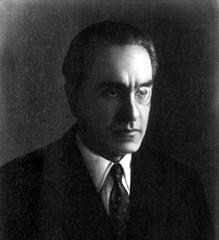
Julius Evola
Julius Evola

Julius Evola was an Italian philosopher known for his profound studies in traditionalism, aristocracy, and mysticism. His thoughts were deeply influenced by Eastern and Western classical philosophy, particularly focusing on social order and spiritual values. more

You May Also Like

“Why did the king thus rescue Mussolini from a rashly overplayed hand? Mussolini had cleverly confronted the sovereign with a hard choice. Either the government must use force to disperse thousands of Blackshirts converging on Rome, with considerable risk of bloodshed and bitter internal dissension, or the king must accept Mussolini as head of government. The most likely explanation for the king’s choice of the second option is a private warning (of which no archival trace remains) by the army commander-in-chief, Marshal Armando Diaz, or possibly another senior military officer, that the troops might fraternize with the Blackshirts if ordered to block them. According to another theory, the king feared that if he tried to use force against Mussolini, his cousin, the duke of Aosta, reputed to be sympathetic to the Fascists, might make a bid for the throne by siding with them. We will probably never know for sure. What seems certain is that Mussolini had correctly surmised that the king and the army would not make the hard choice to resist his Blackshirts by force. It was not Fascism’s force that decided the issue, but the conservatives’ unwillingness to risk their force against his. The “March on Rome” was a gigantic bluff that worked, and still works in the general public’s perceptions of Mussolini’s “seizure of power.”

“The once anticlerical Mussolini, who had written a youthful novel called The Cardinal’s Mistress and, at twenty-one, in a debate with a Swiss pastor, had given God—if He existed—five minutes to strike him dead, had submitted in 1925 to a belated church marriage to his longtime common-law companion Rachele Guidi and to the baptism of their children. In elections on March 24, 1929, the Church’s explicit support helped produce a vote of 98 percent in favor of the Fascist list of candidates (there were no others) for parliament.90 Fascism paid a high price in the long term for the Church’s aid to consensus: as the hare of Fascist dynamism wore itself out, the tortoise of Catholic parish life and culture plodded along to become the basis of Christian democratic rule in Italy after 1945.”

“When Mussolini sacked Farinacci a little more than a year later, however, in April 1926, and replaced him with the less headstrong Augusto Turati (1926–29), he was again strengthening the normative state at the expense of the party. It was at this point, most significantly, that he entrusted the Italian police to a professional civil servant, Arturo Bocchini, rather than to a party zealot on the Himmler model. Operating the all-important police force on bureaucratic principles (promotion of trained professionals by seniority, respect for legal procedures at least in nonpolitical cases) rather than as part of a prerogative state of unlimited arbitrary power was Italian Fascism’s most important divergence from Nazi practice.”

“While making studies of the revolutionary movement, I was aided for a time by Angelica Balabanoff. This restless, diminutive Russian knew almost everyone engaged in socialist and communist activities. Aflame with the spirit of revolt, she spared no effort to infect others with her hatred for the capitalist regime. She was very useful as she not only brought me in contact with everyone I wished to meet, but she also spoke fluently many of the European languages. She would often sit beside me at conferences and in restaurants, translating into my ear, in a soft and to others almost inaudible voice, everything of interest said by the various speakers, no matter from what country they came. She was afterward one of Mussolini's chief aids and became his assistant editor when he took control of *Avanti*. In 1917 she went back to Russia with Lenin and other communists in the train so kindly provided by the German government, which expected them to augment the chaos already paralyzing its enemies on the East. Revolutionists talk fast and are often well educated. In some groups at dinner three or four languages would be spoken and, of course, at all the socialists and labor conferences delegates from many countries delivered their addresses in their native tongues. These different languages were laboriously translated by official interpreters. It was unnecessary to follow these dreary repetitions when Balabanoff sat beside me. She was often the official interpreter at the larger gatherings and her translations were never questioned — although she often excelled the orator in eloquence when he was expressing some of her cherished and more violently revolutionary views. Although she was a valued aid to both Mussolini and Lenin — I believe she brought them together at one time — and the most impassioned revolutionist I have ever met, she left Russia in 1921, ill and thoroughly disillusioned by the Reign of Terror.”

“Though he never actually joined it, he was close to some civilian elements of the Democratic Front for the Liberation of Palestine, which was the most Communist (and in the rather orthodox sense) of the Palestinian formations. I remember Edward once surprising me by saying, and apropos of nothing: 'Do you know something I have never done in my political career? I have never publicly criticized the Soviet Union. It’s not that I terribly sympathize with them or anything—it's just that the Soviets have never done anything to harm me, or us.' At the time I thought this a rather naïve statement, even perhaps a slightly contemptible one, but by then I had been in parts of the Middle East where it could come as a blessed relief to meet a consecrated Moscow-line atheist-dogmatist, if only for the comparatively rational humanism that he evinced amid so much religious barking and mania. It was only later to occur to me that Edward's pronounced dislike of George Orwell was something to which I ought to have paid more attention.”

“Mussolini ha combattuto la massoneria, cioè il grande ordine d'oriente d'Italia, più o meno nei termini pagani del progetto del signor José Cabral. Non so se abbia perseguitato molta gente, né mi interessa saperlo. Quello che so con assoluta certezza è che il Grande Ordine d'Oriente d'Italia è uno di quei morti che godono di ottima salute, Permane, si riunisce, si è depurato, e sta ad aspettare; se ci sia qualcosa da aspettare è un'altra questione. Il piccone del duce può distruggere l'edificio del comunismo italiano, ma non è abbastanza potente per abbattere colonne simboliche, fuse in un metallo che proviene dall'alchimia. Primo de Rivera ha combattuto la massoneria spagnola in modo più blando, secondo la sua indole fidalga. Anche qui so per certo che risultato ottenne: il grande sviluppo, numerico e politico, della massoneria in Spagna. Non so se alcuni fenomeni secondari, come ad esempio la caduta della monarchia, abbiano avuto qualche relazione con questo fatto. Hitler, dopo essersi appoggiato alle tre grandi logge cristiane di Prussia, ha agito secondo il lodevole costume ariano di mordere la mano che gli aveva dato da mangiare. Ha lasciato in pace le altre grandi logge, quelle che non lo avevano sostenuto e che non erano cristiane, e tramite un certo Göring ha intimato alle prime tre di sciogliersi. Esse hanno detto di sì - ai Göring si dice sempre di sì - e hanno continuato a esistere. Per una coincidenza, è stato dopo l'adozione di questa misura che sono cominciati a sorgere in seno al partito nazista contrasti e altre difficoltà. Nella storia, come il signor José Cabral saprà bene, ci sono molte coincidenze del genere.”