Quotessence
Home / Quotes / Quote by Levon Helm

Quote by Levon Helm

Work

This Wheel's on Fire: Levon Helm and the Story of the Band

Browse quotes and source details for this work. more

Author
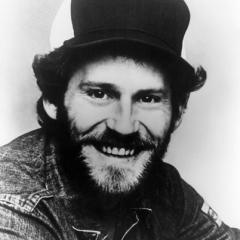
Levon Helm
Levon Helm

Levon Helm was an American musician known for his significant contributions to the rock music scene. Born on May 26, 1940, and passing away on April 19, 2012, Helm was renowned for his distinctive drumming style and soulful singing voice. He was best known for his role as the drummer and lead vocalist for the band The Band, whose unique musical style and profound American cultural influence have earned them a place in rock history. more

You May Also Like

“Well, that night we had our show; but there warn’t only about twelve people there – just enough to pay expenses. And they laughed all the time, and that made the duke mad; and everybody left, anyway, before the show was over, but one boy which was asleep. So the duke said these Arkansaw lunkheads couldn’t come up to Shakespeare; what they wanted was low comedy – and maybe something ruther worse than low comedy, he reckoned. He said he could size their style. So next morning he got some big sheets of wrapping paper and some black paint, and drawed off some handbills, and stuck them up all over the village. The bills said: AT THE COURT HOUSE! FOR 3 NIGHTS ONLY! The World-Renowned Tragedians DAVID GARRICK THE YOUNGER! AND EDMUND KEAN THE ELDER! Of the London and Continental Theatres, In their Thrilling Tragedy of THE KING’S CAMELEOPARD, OR THE ROYAL NONESUCH ! ! ! Admission 50 cents. Then at the bottom was the biggest line of all, which said: LADIES AND CHILDREN NOT ADMITTED. “There,” says he, “if that line don’t fetch them, I don’t know Arkansaw!”

“One of the most ambitious men to exploit the timber trade was Hugh F. McDanield, a railroad builder and tie contractor who had come to Fayetteville along with the Frisco. He bought thousands of acres of land within hauling distance of the railroad and sent out teams of men to cut the timber. By the mid-1880s, after a frenzy of cutting in south Washington County, he turned his gaze to the untapped fortune of timber on the steep hillsides of southeast Washington County and southern Madison County, territory most readily accessed along a wide valley long since leveled by the east fork of White River. Mr. McDanield gathered a group of backers and the state granted a charter September 4, 1886, giving authority to issue capital stock valued at $1.5 million, which was the estimated cost to build a rail line through St. Paul and on to Lewisburg, which was a riverboat town on the Arkansas River near Morrilton. McDanield began surveys while local businessman J. F. Mayes worked with property owners to secure rights of way. “On December 4, 1886, a switch was installed in the Frisco main line about a mile south of Fayetteville, and the spot was named Fayette Junction.” Within six months, 25 miles of track had been laid east by southeast through Baldwin, Harris, Elkins, Durham, Thompson, Crosses, Delaney, Patrick, Combs, and finally St. Paul. Soon after, in 1887, the Frisco bought the so-called “Fayetteville and Little Rock” line from McDanield. It was estimated that in the first year McDanield and partners shipped out more than $2,000,000 worth of hand-hacked white oak railroad ties at an approximate value of twenty-five cents each. Mills ran day and night as people arrived “by train, wagon, on horseback, even afoot” to get a piece of the action along the new track, commonly referred to as the “St. Paul line.” Saloons, hotels, banks, stores, and services from smithing to tailoring sprang up in rail stop communities.”