“There are quiet places also in the mind,' he said, meditatively. 'But we build bandstands and factories on them. Deliberately - to put a stop to the quietness. We don't like the quietness. All the thoughts, all the preoccupations in my head - round and round, continually.' He made a circular motion with his hand. 'And the jazz bands, the music hall songs, the boys shouting the news. What's it for, what's it all for? To put an end to the quiet, to break it up and disperse it, to pretend at any cost is isn't there. Ah, but is is, it is there, in spite of everything, at the back of everything. Lying awake at night, sometimes - not restlessly, but serenely, waiting for sleep - the quiet reestablishes itself, piece by piece; all the broken bits, all the fragments of it we've been so busily dispersing all day long. It re-establishes itself, an inward quiet, like this outward quiet of grass and trees. It fills one, it grows - a crystal quiet, a growing expanding crystal. It grows, it becomes more perfect; it is beautiful and terrifying, yes, terrifying, as well as beautiful. For one's alone in the crystal and there 's no support from outside, there's nothing external and important, nothing external and trivial to pull oneself up by or stand on, superiorly, contemptuously, so that one can look down. There's nothing to laugh at or feel enthusiastic about. But the quiet grows and grows. Beautifully and unbearably. And at last you are conscious of something approaching; it is almost a faint sound of footsteps. Something inexpressibly lovely and wonderful advances through the crystal, nearer, nearer. And, oh, inexpressibly terrifying. For if it were to touch you, if it were to seize and engulf you, you'd die; all the regular, habitual, daily part of you would die. There would be an end of bandstands and whizzing factories, and one would have to begin living arduously in the quiet, arduously in some strange unheard-of manner. Nearer, nearer come the steps; but one can't face the advancing thing. One daren't. It's too terrifying, it's too painful to die. Quickly, before it is too late, start the factory wheels, bang the drum, blow the saxophone. Think of the women you'dl like to sleep with, the schemes for making money, the gossip about your friends, the last outrage of the politicians. Anything for a diversion. Break the silence, smash the crystal to pieces. There, it lies in bits; it is easily broken, hard to build up and easy to break. And the steps? Ah, those have taken themselves off, double quick. Double quick, they were gone at the first flawing of the crystal. And by this time the lovely and terrifying thing is three infinities away, at least. And you lie tranquilly on your bed, thinking of what you'd do if you had ten thousand pounds and of all the fornications you'll never commit.' He thought of Rosie's pink underwear.”
Quote by Aldous Huxley
Book:Antic hay
Work
Author
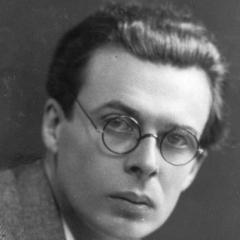
Aldous Huxley
Aldous Huxley was an English writer and philosopher, renowned for his dystopian novel 'Brave New World'. Born on July 26, 1894, in Godalming, Surrey, England, he was the younger brother of the poet and critic Leonard Huxley. Huxley's works frequently delved into the interplay of science, politics, and philosophy, and he was a prominent figure in the literary movement known as the 'Lost Generation'. He passed away on November 22, 1963. more
You May Also Like
Source: A Court of Mist and Fury
“Her silence had disturbed his peace.”
Source: Harp and the Lyre: Exposed
Source: Inventory: A Memoir
Source: The Stranger
Source: I Want To Know You When You’re Forty
“God is peace, bliss, beauty and truth. Focus your energy on that, life will be like that.”
“The peaceful stillness of the woods envelops me as I walk along the winding trail.”
Source: She Is Haunted: Stories