Quotessence
Home / Quotes / Quote by Peter Orner

Quote by Peter Orner

Work

Maggie Brown & Others: Stories

Browse quotes and source details for this work. more

Author
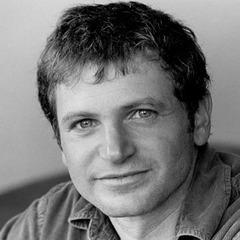
Peter Orner
Peter Orner

Peter Orner, born in 1968, is an American writer known for his unique narrative style and profound insights into human nature. His works cover a variety of themes, including family, love, memory, and social change. more

You May Also Like

“I was seeing in these awkward composites my own liminal self. The two sides of me that were slammed together against their will, that refused to mix. I was a failed hybrid, made up of unalloyed selves. My Russian mother who regretted marrying my Sudanese father. My African father who came to hate his white wife. My atheist mother who blotted out my Muslim heritage. My Arab father who gave me up to Europe without a fight. I was the freak. I had been told so and I had been taught so and I had chewed on this verdict to the extent that, no matter what, I could never purge myself of it entirely.”

“Once he preached a sermon on "Music at Zion Church" and sent me word that I must be sure to be there, for I would hear him make mention of my father. That is just about typical of Protestant pulpit oratory in the more "liberal" quarters. I went, dutifully, that morning, but before he got around to the part in which I was supposed to be personally interested, I got an attack of my head-spinning and went out into the air. When the sermon was being preached, I was sitting on the church steps in the sun, talking to a black-gowned verger, or whatever he was called. By the time I felt better, the sermon was over. I cannot say I went to this church very often: but the measure of my zeal may be judged by the fact that I once went even in the middle of the week. I forget what was the occasion: Ash Wednesday or Holy Thursday. There were one or two women in the place, and myself lurking in one of the back benches. We said some prayers. It was soon over. By the time it was, I had worked up courage to take the train into New York and go to Columbia for the day.”

“God was there, but hiding. Deliberately hiding. It was a question of forcing him to come out of his lair, his abstract absolute lair, and compelling him to incarnate himself as a felt experienced quality of personal actions. It was a matter of violently dragging him from outsideness and aboveness to insideness. But God was a joker. Spandrell had conjured him with violence to appear; and out of the bloody steam of the magically compelling sacrifice had emerged only a dust-bin. But the very failure of the incantation had been a proof that God was there, outside. Nothing happens to a man except that which is like himself. Dust-bins to dust-bins, dung to dung. He had not succeeded in compelling God to pass from outsideness to insideness. But the appearance of the dust-bin confirmed the reality of God as a providence, God as a destiny, God as the giver or withholder of grace, God as the ‘redestinating saviour or destroyer. Dust-bins had been his predestined lot. In giving him dust-bins yet again, the providential joker was merely being consistent.”