Quotessence
Home / Quotes / Quote by Thomas Merton

Quote by Thomas Merton

“Once he preached a sermon on "Music at Zion Church" and sent me word that I must be sure to be there, for I would hear him make mention of my father. That is just about typical of Protestant pulpit oratory in the more "liberal" quarters. I went, dutifully, that morning, but before he got around to the part in which I was supposed to be personally interested, I got an attack of my head-spinning and went out into the air. When the sermon was being preached, I was sitting on the church steps in the sun, talking to a black-gowned verger, or whatever he was called. By the time I felt better, the sermon was over. I cannot say I went to this church very often: but the measure of my zeal may be judged by the fact that I once went even in the middle of the week. I forget what was the occasion: Ash Wednesday or Holy Thursday. There were one or two women in the place, and myself lurking in one of the back benches. We said some prayers. It was soon over. By the time it was, I had worked up courage to take the train into New York and go to Columbia for the day.”

Quote by Thomas Merton

Work

The Seven Storey Mountain

The Seven Storey Mountain is a memoir that chronicles the author's transformation from a secular existence to a life of religious devotion. The narrative takes readers through the author's struggles with his own identity and purpose, ultimately leading to his conversion and commitment to a religious order. more

Author
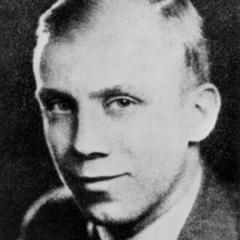
Thomas Merton
Thomas Merton

Thomas Merton (January 31, 1915 - December 10, 1968) was an American writer, poet, social critic, and mystic. His works covered a wide range of topics including philosophy, religion, and social justice, and were highly appreciated by readers. more

You May Also Like

“God was there, but hiding. Deliberately hiding. It was a question of forcing him to come out of his lair, his abstract absolute lair, and compelling him to incarnate himself as a felt experienced quality of personal actions. It was a matter of violently dragging him from outsideness and aboveness to insideness. But God was a joker. Spandrell had conjured him with violence to appear; and out of the bloody steam of the magically compelling sacrifice had emerged only a dust-bin. But the very failure of the incantation had been a proof that God was there, outside. Nothing happens to a man except that which is like himself. Dust-bins to dust-bins, dung to dung. He had not succeeded in compelling God to pass from outsideness to insideness. But the appearance of the dust-bin confirmed the reality of God as a providence, God as a destiny, God as the giver or withholder of grace, God as the ‘redestinating saviour or destroyer. Dust-bins had been his predestined lot. In giving him dust-bins yet again, the providential joker was merely being consistent.”

“Alma focused. She went behind the tall wood-carved bar and straightened the tequila bottles. She loved the colors and designs of the containers--- brightly colored, some were even hand-painted. Her favorite bottle was a white ceramic one painted with intricate blue leaves. The shape of the bottle resembled the curves of a woman, and the liquor itself was just as robust, just as refined--- truly the intersection of quality and art. She signaled her bar manager, Lupe, to turn the music on, to which Lupe quickly obliged. The melodic sounds of one of her favorite Spanish ballads filled the air; the singer's deep baritone voice almost as intoxicating as the liquor in the place. Almost. A waft from the kitchen danced through her nostrils. Though this was a tequila bar, Mezcalifornia was known for its happy hour. They served mostly the usual fare that you would expect--- small carnitas street tacos, fresh-charred corn dressed with a tangy garlic sauce and garnished with cotija cheese, mini ahi tostadas, and of course, guacamole. She hadn't wanted a typical sit-down restaurant with gourmet food and a wine list. Been there, done that. No. She wanted a vibe. A destination. An experience.”

“De volgende dag kwamen de eerste meisjes, Gwynne en Jessica. Het ene pikzwart, het andere hoogblond. Geverfde haren, felrood gelakte nagels, ieder met een rolkoffer en een beautycase. Puck stelde ze aan mij voor als haar vriendinnen. Willen ze een kamer, vroeg ik. Puck glimlachte. Ze komen hier werken, zei ze, ze maken deel uit van het businessplan. Ik vermoedde natuurlijk wel wat dat plan behelsde, vooral toen drie dagen later Gertrude, een Duits meisje, en Caro, een Vlaamse, hun intrek in het hotel namen. Maar ik zei voorlopig niets. Alle kamers waren nu op één na bezet. De meisjes liepen ieder gehuld in een wolk parfum op onpraktische hoge hakken en in strakke kokerrokken door het hotel. Ze noemden mij Madame, Madame La Promesse. Ik was niet gek. Op een avond, toen de meisjes naar boven waren, sprak ik Puck erop aan. Je wilde toch dat het hotel weer gaat lopen? Natuurlijk, dat was het liefste wat ik wilde. Laat mij mijn gang dan gaan. Binnenkort komen de eerste bezoekers en komt ook het geld binnen. Wacht maar af.”