Quotessence
Home / Quotes / Quote by Anton Chekhov

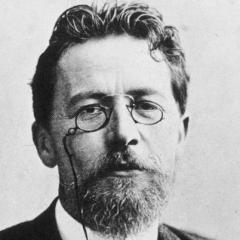
Quote by Anton Chekhov

“Anna Petrovna: Do you know what, Kolya? Try and sing, laugh, get angry, as you once did... You stay in, we'll laugh and drink fruit liqueur and we'll drive away your depression in a flash. I'll sing if you like. Or else let's go and sit in the dark in your study as we used to, and you'll tell me about your depression... You have such suffering eyes. I'll look into them and cry, and we'll both feel better.”

Quote by Anton Chekhov

Book:Ivanov

Work

Ivanov

Browse quotes and source details for this work. more

Author

Anton Chekhov
Anton Chekhov

Anton Chekhov, born on January 29, 1860, was a prominent Russian physician and short story writer. His works are renowned for their profound psychological insights and critical portrayal of social realities. Chekhov's short stories have had a profound impact on literature both in Russia and around the world. more

You May Also Like

“This work of leaving, of aiming to challenge power on the field where it maintains the least glaring asymmetry, demands one answer the question: What are you willing to give up to alleviate someone else’s suffering? It makes it impossible for one so engaged to not understand, with terrible clarity, that under the auspices of this machine, the prevailing answer echoing from the mouths of so many of one’s own neighbors is: Nothing at all.”

“The individual psychological stages in the lives of most people are: 1. To be hurt as a small child without anyone recognizing the situation as such 2. To fail to react to the resulting suffering with anger 3. To show gratitude for what are supposed to be good intentions 4. To forget everything 5. To discharge the stored-up anger onto others in adulthood or to direct it against oneself”

“But where is the antidote for lucid despair, perfectly articulated, proud, and sure? All of us are miserable, but how many know it? The consciousness of misery is too serious a disease to figure in an arithmetic of agonies or in the catalogues of the Incurable. It belittles the prestige of hell, and converts the slaughterhouses of time into idyls. What sin have you committed to be born, what crime to exist? Your suffering like your fate is without motive. To suffer, truly to suffer, is to accept the invasion of ills without the excuse of causality, as a favor of demented nature, as a negative miracle. . .”