Quotessence
Home / Quotes / Quote by Bob Dylan

Quote by Bob Dylan

Work

The Philosophy of Modern Song

Browse quotes and source details for this work. more

Author
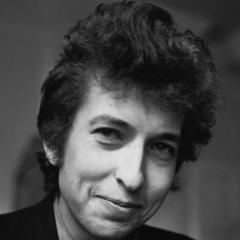
Bob Dylan
Bob Dylan

Bob Dylan, born Robert Allen Zimmerman on May 24, 1941, is an American musician, singer, and songwriter. Renowned for his distinctive voice and influential lyrics, Dylan's music spans genres from folk to rock, country, and gospel, profoundly impacting music in the second half of the 20th century. more

You May Also Like

“If all pleasure has, preserved within it, earlier pain, then here pain, as pride in bearing it, is raised directly, untransformed, as a stereotype, to pleasure: unlike wine, each glass of whisky, each inhalation of cigar smoke, still recalls the repugnance that it cost the organism to become attuned to such strong stimuli, and this alone is registered as pleasure.”

“Sorrow, terror, anguish, despair itself are often the chosen expressions of an approximation to the highest good. Our sympathy in tragic fiction depends on this principle; tragedy delights by affording a shadow of the pleasure which exists in pain. This is the source also of the melancholy which is inseparable from the sweetest melody. The pleasure that is in sorrow is sweeter than the pleasure of pleasure itself.”

“It is my bad luck that this has happened to me.' No, you should rather say: 'It is my good luck that, although this has happened to me, I can bear it without pain, neither crushed by the present nor fearful of the future.' Because such a thing could have happened to any man, but not every man could have borne it without pain. So why see more misfortune in the event than good fortune in your ability to bear it?”

“He felt the full warmth of that pleasure from which the proud shut themselves out; the pleasure which not only goes with humiliation, but which almost is humiliation. Men who have escaped death by a hair have it, and men whose love is returned by a woman unexpectedly, and men whose sins are forgiven them. Everything his eye fell on it feasted on, not aesthetically, but with a plain, jolly appetite as of a boy eating buns. He relished the squareness of the houses; he liked their clean angles as if he had just cut them with a knife. The lit squares of the shop windows excited him as the young are excited by the lit stage of some promising pantomime. He happened to see in one shop which projected with a bulging bravery on to the pavement some square tins of potted meat, and it seemed like a hint of a hundred hilarious high teas in a hundred streets of the world. He was, perhaps, the happiest of all the children of men. For in that unendurable instant when he hung, half slipping, to the ball of St. Paul's, the whole universe had been destroyed and re-created.”