Quotessence
Home / Quotes / Quote by Richard Dawkins

Quote by Richard Dawkins

Work

Unweaving the Rainbow: Science, Delusion and the Appetite for Wonder

This book delves into the intricate relationship between science and the human experience, examining the ways in which scientific discoveries have shaped our understanding of the universe. It intertwines scientific explanations with philosophical insights, encouraging readers to ponder the nature of reality and the limits of human knowledge. more

Author
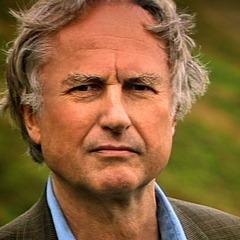
Richard Dawkins
Richard Dawkins

Richard Dawkins is a British ethologist, writer, and thinker, known for his contributions to evolutionary theory, particularly in the field of modern synthesis. He is widely recognized for his best-selling book 'The Selfish Gene', which explains the central role of genes in biological evolution. Dawkins has made significant impacts in the field of science communication and has sparked widespread discussions about human behavior and morality. more

You May Also Like

“[R]eally the only reason she persisted in his thoughts at all was that their separation had been so abrupt. She was like a book with the final pages torn out, leaving him at the mercy of his imagination. If he were to see her, she would no longer be an enticing mystery but a real woman, no longer a dream sylph his mind could turn to when things went awry with other women (as they always did) nor a magical solution to all the riddles and disappointments of his existence. ... If he could just see her, he would be cured of her.”

“Love! What had I to love? Oh many things: there was the moonshine, and the bright stars; the breezes and the refreshing rains; there was the whole earth and the sky that covers it: all lovely forms that visited my imagination, all memories of heroism and virtue. Yet this was very unlike my early life although as then I was confined to Nature and books. Then I bounded across the fields; my spirit often seemed to ride upon the winds, and to mingle in joyful sympathy with the ambient air. Then if I wandered slowly I cheered myself with a sweet song or sweeter day dreams. I felt a holy rapture spring from all I saw. I drank in joy with life; my steps were light; my eyes clear from the love that animated them, sought the heavens, and with my long hair loosened to the winds I gave my body and my mind to sympathy and delight.”

“I compared Obama to an Etch A Sketch. You could impose upon him whatever you wanted. He was your American dream. That was the beauty of the hope and change message emblazoned on his face. He was the promise of what America could be and become for everyone if the nation overcame its racism and cruelty. A scrawny kid born to a Muslim Kenyan father and a white mother, who grew up in Indonesia, ate biryani with his Pakistani roommate in college, and graduated from Harvard Law School, ended up being one of the most beloved politicians in the modern era and the most powerful man in the world. Maybe a Pakistani kid could become president? If America voted for Obama twice, then why not our kids? That was the power of Obama. He allowed the nation to imagine "What If?”

“The feelings or imaginings which tend to prevent the mind from entering into the heart and so attaining to pure prayer, or prayer of the heart, are either those which are the result of sin, or an attraction towards sin, or those which make us think we are being drawn towards good actions or a real meeting with God himself, but which in fact do not lead to God. That is why the Fathers warn monks even against images that seem to be good. They exhort them not to rely on any kind of imagination or impression. Moreover the Fathers consider thought, even theological thought, to be a no less dangerous obstacle to the mind's entry into the heart. They must be watchful not to rest in theological thinking, or to slip into it, when they are moved to prayer or while they are praying. Thinking about God interrupts direct encounter with him. By theological thinking a man becomes shut in on himself.”

“That was the power of radio at its height. The Shadow, we were assured at the beginning of each episode, had "The power to cloud men's minds." It strikes me that, when it comes to fiction in the media, it is television and movies which so often cloud that part of our minds where the imagination moves most fruitfully; they do so by imposing the dictatorship of the visual set.”