Quotessence
Home / Quotes / Quote by Sherwood Anderson

Quote by Sherwood Anderson

“The object of art is not to make salable pictures. It is to save yourself. The fools who write articles about me think that one morning I suddenly decided to write and began to produce masterpieces. There is no special trick about writing or painting either. I wrote constantly for 15 years before I produced anything with any solidity to it.... The thing of course, is to make yourself alive. Most people remain all of their lives in a stupor. The point of being an artist is that you may live.... You won't arrive. It is an endless search.”

Quote by Sherwood Anderson

Author
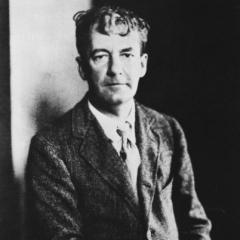
Sherwood Anderson
Sherwood Anderson

American novelist known for his profound insights into the lives of the American middle class. Anderson's works often focus on the inner world and social status of ordinary people, and his style is concise and direct, which has had a profound impact on American literature. more

You May Also Like

“Many of the other megalithic works at Machu Pic'chu show large gaps as in the two previous photos. The width of these gaps is very similar, and again suggest that a massive earthquake cataclysm, moving in a east-west direction, affected the site in the very distant past [...]. A geologist who inspected this with the author stated quite emphatically that such a drop would not have been the result of poor foundation work when the structure was made, but far more likely, again, the result of a catastrophic earthquake. She also stated that such an earthquake would have caused the rough stone and clay mortar buildings to be completely demolished. This, then, clearly indicates that the megalithic core of Machu Pic'chu, which comprises about 5-10 percent, is older than the Inca, and may in fact have been made prior to the cataclysmic event of about 12,000 years ago.”

“In 1983 Donald Rahn of Rahn Granite Surface Plate Co. told me that diamond drills, rotating at nine hundred revolutions per minute, penetrate granite at the rate of one inch in five minutes. In 1996, Eric Leither of Tru-Stone Corp. told me that these parameters have not changed since then. The feedrate of modern drills, therefore, calculates to be .0002 inch per revolution, indicating that the ancient Egyptians drilled into granite with a feedrate that was five hundred times greater or deeper per revolution of the drill than modern drills! The other characteristics of the artifacts also pose a problem for modern drills. Somehow the Egyptians made a tapered hole with a spiral groove that was cut deeper through the harder constituent of the granite. If conventional machining methods cannot answer just one of these questions, how do we answer all three?”

“Ultrasonic drilling fully explains how the holes and cores found in the Valley Temple at Giza could have been cut, and it is capable of creating all the details that Petrie and I puzzled over. Unfortunately for Petrie, ultrasonic drilling was unknown at the time he made his studies, so it is not surprising that he could not find satisfactory answers to his queries. In my opinion, the application of ultrasonic machining is the only method that completely satisfies logic, from a technical viewpoint, and explains all noted phenomena. [...] The most significant detail of the drilled holes and cores studied by Petrie was that the groove was cut deeper through the quartz than through the feldspar. Quartz crystals are employed in the production of ultrasonic sound and, conversely, are responsive to the influence of vibration in the ultrasonic ranges and can be induced to vibrate at high frequency. When machining granite using ultrasonics, the harder material (quartz) would not necessarily offer more resistance, as it would during conventional machining practices. An ultrasonically vibrating tool bit would find numerous sympathetic partners, while cutting through granite, embedded right in the granite itself. Instead of resisting the cutting action, the quartz would be induced to respond and vibrate in sympathy with the high-frequency waves and amplify the abrasive action as the tool cut through it.”

“In order to draw mechanical vibrations and relieve the stresses that build up within the Earth, we would need an object that would respond sympathetically with the Earth's fundamental frequency. This object would need to be designed in such a way that its own resonant frequency was the same as, or a harmonic of, the Earth's. In this manner, energy transfer from the source would be at maximum load. In harmony with the Earth's vibrations, this object would have the potential to become a coupled oscillator. (A coupled oscillator is an object that is in harmonic resonance with another, usually larger, vibrating object. When set into motion, the coupled oscillator will draw energy from the source and vibrate in sympathy as long as the source continues to vibrate.) Because the Earth constantly generates a broad spectrum of vibration, we could utilize vibration as a source of energy if we developed suitable technology. Naturally, any device that attracted greater amounts of this energy than is normally being radiated from the Earth would greatly improve the efficiency of the equipment. Because energy will inherently follow the path of least resistance, it follows that any device offering less resistance to this energy than the surrounding medium through which it passes would have a greater amount of energy channeled through it. Keeping all of this in mind and knowing that the Great Pyramid is a mathematical integer of the Earth, it may not be so outlandish to propose that the pyramid is capable of vibrating at a harmonic frequency of the Earth's fundamental frequency.”

“No machines have been found in the archaeological record to support these assertions, but there is an abundance of circumstantial evidence that leads to such conclusions. Are the machines still intact and lying under the desert sand? Or were they removed completely from the areas? Or could it be that all this evidence points to an earlier civilization that suffered a cataclysm of such magnitude that much of what existed was destroyed, and what remained was susceptible to erosion, decay, and corrosion, and slowly disappeared over a long period of time? This brings us back to Robert Schoch's evaluation of the erosion pattern on the Sphinx and the Sphinx enclosure. He claimed that the period of time when sufficient rain fell in Egypt to cause this erosion was seven to nine thousand years ago. Is this sufficient time for ancient machines to turn to dust and blow away? It seems incredible to imagine, but there is reason to suspect that this could have happened. [...] If we follow the idea of an older civilization, therefore, the pyramids would have already been there before the first dynasty of the ancient Egyptians. The Great Pyramid was, most likely, the zenith of construction on the plateau, and the other pyramids were likely built before it was. Yet something happened to the culture that built the pyramids, and when Khufu came on the scene, he naturally chose the most impressive structure--the Great Pyramid--as his own, and his heirs took turns in claiming the rest. What event could have brought death and destruction to this ancient civilization that is referred to in Egyptian lore as being inhabited by gods of the First Time?”

“So what was going on in Malta that led to all this? Why did the first megalithic temple-builders in the world choose to make things so difficult for themselves? Why didn't they start with small megaliths (if that is not too serious a contradiction in terms)? Why didn't they start simple? Why did they plunge straight into the very complicated stuff, like Gigantija and the Hypogeum? And, having plunged, how did they manage to produce such magnificent results? Was it beginner's luck? Or were their achievements as humanity's pioneering architects the product of some sort of heritage? Beginner's luck is possible, but having studied the earliest temples, and their level of perfection, archaeologists agree that heritage is the right answer. The only problem is what heritage? And where is it to be looked for? Since it is the received wisdom that no human beings lived on Malta before 5200 BC, and since this is a 'fact' that is at present unquestioned anywhere within conventional scholarship, archaeologists from roughly the mid-twentieth century onwards have simply seen no reason to explore the possibility that the heritage of the Maltese temples might be older than 5200 BC. To do so would be the research equivalent of an oxymoron -- like breeding dodos, trying to conduct an interview with William Shakespeare or seeking evidence that the earth is flat -- and would invite the ridicule of one's peers.”

“The good thing about shocking is that it clears the brain of preconceptions for a moment, and in that moment the work has a chance to cut through all the habits and learnt behavior of the viewer and make a fresh impact, before all the conditioning crowds in again.”