Quotessence
Home / Quotes / Quote by Virginia Woolf

Quote by Virginia Woolf

“**LET US BEGIN** by clearing up the old confusion between the man who loves learning and the man who loves reading, and point out that there is no connexion whatever between the two. A learned man is a sedentary, concentrated, solitary enthusiast, who searches through books to discover some particular grain of truth upon which he has set his heart. If the passion for reading conquers him, his gains dwindle and vanish between his fingers. A reader, on the other hand, must check the desire for learning at the outset; if knowledge sticks to him well and good, but to go in pursuit of it, to read on a system, to become a specialist or an authority, is very apt to kill what it suits us to consider the more humane passion for pure and disinterested reading. In spite of all this, we can easily conjure up a picture which does service for the bookish man and raises a smile at his expense. We conceive a pale, attenuated figure in a dressing gown, lost in speculation, unable to lift a kettle from the hob, or address a lady without blushing, ignorant of the daily news, though versed in the catalogues of the secondhand booksellers, in whose dark premises he spends the hours of sunlight—a delightful character, no doubt, in his crabbed simplicity, but not in the least resembling that other to whom we would direct attention. For the true reader is essentially young. He is a man of intense curiosity; of ideas; open minded and communicative, to whom reading is more of the nature of brisk exercise in the open air than of sheltered study; he trudges the high road, he climbs higher and higher upon the hills until the atmosphere is almost too fine to breathe in; to him it is not a sedentary pursuit at all. But, apart from general statements, it would not be hard to prove by an assembly of facts that the great season for reading is the season between the ages of eighteen and twenty-four. The bare list of what is read then fills the heart of older people with despair. It is not only that we read so many books, but that we had such books to read. If we wish to refresh our memories, let us take down one of those old notebooks which we have all, at one time or another, had a passion for beginning. Most of the pages are blank, it is true; but at the beginning we shall find a certain number very beautifully covered with a strikingly legible handwriting. Here we have written down the names of great writers in their order of merit; here we have copied out fine passages from the classics; here are lists of books to be read; and here, most interesting of all, lists of books that have actually been read, as the reader testifies with some youthful vanity by a dash of red ink. We will quote a list of the books that someone read in a past January at the age of twenty, most of them probably for the first time. 1. “Rhoda Fleming.” 2. “The Shaving of Shagpat.” 3. “Tom Jones. 4. “The Laodicean.” 5. “Dewey’s Psychology.” 6. “The Book of Job.” 7. “Webbe’s Discourse of Poesie.” 8. “The Duchess of Malfi.” 9. “The Revenger’s Tragedy.” And so he goes on from month to month, until, as such lists will, it suddenly stops in the month of June. But if we follow the reader through his months it is clear that he can have done practically nothing but read. Elizabethan literature is gone through with some thoroughness; he reads a great deal of Webster, Browning, Shelley, Spenser, and Congreve; Peacock he read from start to finish; and most of Jane Austen’s novels two or three times over. He read the whole of Meredith, the whole of Ibsen, and a little of Bernard Shaw. We may be fairly certain, too, that the time not spent in reading was spent in some stupendous argument in which the Greeks were pitted against the modern, romance against realism, Racine against Shakespeare, until the lights were seen to have grown pale in the dawn.”

Quote by Virginia Woolf

Author
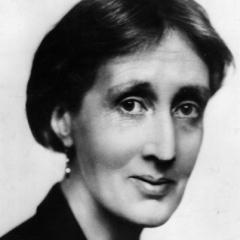
Virginia Woolf
Virginia Woolf

British modernist writer, known for her unique narrative techniques and profound portrayal of female experience. Her works include 'To the Lighthouse' and 'Mrs. Dalloway'. more

You May Also Like

“And more specifically, when asked by a youngster about the right way of reading Sri Aurobindo, the Mother replied:4 I advise always to read a little at a time, keeping the mind as tranquil as one can, without making an effort to understand, but keeping the head as silent as possible, and letting the force contained in what one reads enter deep within. This force received in the calm and the silence will do its work of light and, if needed, will create in the brain the necessary cells for the understanding. Thus, when one re-reads the same thing some months later, one perceives that the thought expressed has become much more clear and close, and even sometimes altogether familiar. It is preferable to read regularly, a little every day, and at a fixed hour if possible; this facilitates the brain-receptivity (emphasis in the original).”

“It sometimes seemed to Molly that the library was a place of silent discord and anarchy, its superficial tranquillity concealing a babel of assertion and dispute. Fiction is one strident lie - or rather, many competing lies; history is a long narrative of argument and reassessment; travel shouts of self-promotion; biography is pushing a product. As for autobiography... And all this is just fine. That is the function of books: they offer a point of view, they offer many confliction points of view, they provoke thoughts, they provoke irritation and admiration and speculation. They take you out of yourself and put you down somewhere else from whence you never entirely return. If the library were to speak, Molly felt, if it were to speak with a thousand tongues, there would be a deep collective growl coming from the core collection up on the high shelves, where the voices of the nineteenth century would be setting new precedents, the bleats and cries of new opinion, new fashion, new style, The surface repose of a library is a cynical deception.”

“Reading makes you see with clearer eyes and understand the world better. When you can do that, you become stronger – the feeling you associate with success. But at the same time, it gives you pain. Within the pages, there’s much suffering, beyond what we’ve gone through in our finite experience of life. You’ll read about suffering you didn’t know existed. Having experienced their pain through words, it becomes a lot harder to focus on pursuing individual happiness and success. Reading makes you deviate further from the textbook definition of success because books don’t make us go ahead of or above anyone else; they guide us to stand alongside others.”

“روشنایی گاز خواندن، ورق بازی کردن، و حتی صحبت کردن را نیز دلپذیرتر کرد. شب ها هنگام غذا خوردن می شد غذا را دید. می شد تیغ ماهی را درآورد، می شد دید چقدر نمک یا فلفل از نمکدان و جای فلفل فرو می ریزد. اگر سوزنی یا چیز کوچیک دیگری به زمین می افتاد لازم نبود تا روز بعد منتظر بمانند. عنوان کتاب ها را در قفسه ها می شد دید و‌خواند. مردم بیشتر مطالعه می کردند. تصادفی نیست که تعداد روزنامه ها، مجلات، کتاب ها و صفحات موسیقی و اوراق نت در اواسط قرن نوزدهم به طور ناگهانی افزایش یافت. تعداد روزنامه ها و نشریات ادواری در انگلیس کمتر از صد و‌ پنجاه مورد در ابتدای قرن به تقریبا پنج هزار در پایان قرن رسید.”

“I’m more attracted to this other one.” “Tess of the d’Urbervilles. It’s the original. You’re bold enough to read Hardy in English?” “Don't you see? It feels as if it's been waiting for me. As if it has been hiding here for me since before I was born.” I looked at her in astonishment. Bea’s lips crinkled into a smile. “What have I said?” Then, without thinking, barely brushing her lips, I kissed her.”

“Listen to me, bat boy…" The point of the blade is moving up and down on my bulge. "You are hot, and I really want to sit on your pretty face. But if you ever even think of having my blood, I am going to cut off your cock and use it as my dildo after I preserve it." "Ah, how lucky I am since you can see ghosts. So… I’ll enjoy the view." I point to my cock. She rolls her eyes. "I fucking hate you." I am fucking obsessed with her.”

“How strange to feel something so close to mercy, whatever that was, and stranger still that it should be found in here of all places, at the end of a road of ruined houses by a toxic river. That among a pile of salvaged trash, he would come closest to all he ever wanted to be: a consciousness sitting under a light-bulb reading his days away, warm and alone, alone and yet, somehow, still somebody's son.”