Quotessence
Home / Quotes / Quote by Alexander the Great

Quote by Alexander the Great

“Holy shadows of the dead, I am not to blame for your cruel and bitter fate, but the accursed rivalry which brought sister nations and brother people to fight one another. I do not feel happy for this victory of mine. On the contrary, I would be glad, brothers, if I had all of you standing here next to me, since we are united by the same language, the same blood and the same visions. [Addressing the dead Hellenes of the Battle of Chaeronea]”

Quote by Alexander the Great

Author
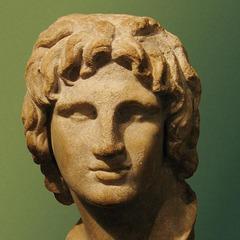
Alexander the Great
Alexander the Great

Alexander the Great, born in July 356 BC and died in June 323 BC, was a renowned military commander and politician in ancient Greece. Through a series of conquests, he established the vast Alexander Empire, which spread Greek culture to the East and had a profound impact on the world. more

You May Also Like

“Joy is meant to be felt; its not meant to be detained. It is meant to be shared with others; not to be felt alone. When all the mouths smile out their teeth together, thats when the greatest happiness can be measured. You don't smile in order to see your friends cry and claim your joy is divine.”

“And here she was, an old woman now, living and hoping, keeping faith, afraid of evil, full of anxiety for the living and an equal concern for the dead; here she was, looking at the ruins of her home, admiring the spring sky without knowing that she was admiring it, wondering why the future of those she loved was so obscure and the past so full of mistakes, not realizing that this very obscurity and unhappiness concealed a strange hope and clarity, not realizing that in the depths of her soul she already knew the meaning of both her own life and the lives of her nearest and dearest, not realizing that even though neither she herself nor any of them could tell what was in store, even though they all knew only too well that at times like these no man can forge his own happiness and that fate alone has the power to pardon and chastise, to raise up to glory and to plunge into need, to reduce a man to labour- camp dust, nevertheless neither fate, nor history, nor the anger of the State, nor the glory or infamy of battle has any power to affect those who call themselves human beings. No, whatever life holds in store – hard-won glory, poverty and despair, or death in a labour camp – they will live as human beings and die as human beings, the same as those who have already perished; and in this alone lies man's eternal and bitter victory over all the grandiose and inhuman forces that ever have been or will be.”