Quotessence
Home / Quotes / Quote by William James

Quote by William James

“Metaphysics means nothing but an unusually obstinate effort to think clearly. The fundamental conceptions of psychology are practically very clear to us, but theoretically they are very confused, and one easily makes the obscurest assumptions in this science without realizing, until challenged, what internal difficulties they involve.”

Quote by William James

Work

The Principles of Psychology: Volume 1

Browse quotes and source details for this work. more

Author
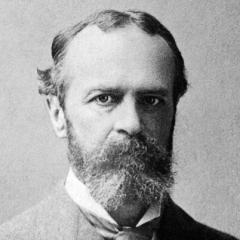
William James
William James

William James, born on January 11, 1842, and died on August 26, 1910, was an influential American philosopher, psychologist, and writer. He is considered one of the founders of functionalism in psychology and has had a profound impact on the fields of psychology, philosophy, and religion. more

You May Also Like

“In all the seconds of life that beat solemnly from my heart, in all the hours of waiting for the release that binds us, in all the months of moons that guided our hopes, of all the years of yesterday that taught us the path of which we walk today: Today, I am true. Today I will write without release; without questions or care of the minds that do not understand the words that will lie before me in this letter. Licentia. The release of anything that covers my ears or blinds my eyes. Oh, licentia. The people shall call me insane because I have proven to remain unrelenting in the belief that freedom and justice and truth are all subject to change, but that the ideas are the spark which light the fire to continue my journey. These words have no value unless given an idea, and that is the only part that is bounded in this world: the idea. The idea to be free; no matter the cost of autonomy and decisions and conscious state of mind. The idea to have justice; without a governance to proclaim what it defines. The idea to seek truth; no matter how many lies claim to hold the reality. Licentia. The release of anything that covers my ears or blinds my eyes. Oh, licentia. It is the fear that controls the grip which lacerates our brains and chains our souls. It is the fear that without power or an entity that seeks it, that we will be dangerous. It is the fear of our ourselves that binds us. But once we are no longer afraid of the mirror that grants us our reflection, we begin to understand that the fear was simply an illusion. It is the pain that scares us into submission and breaks our vows to our hearts. It is the pain that makes an honest man beg on his knees to the wolves that seek to devour his ideas. It is the pain that creates the stage to which only fools applaud and puppets play. It is the pain that makes us see the ugliness of our soul. But once we are in pain, we realize that it was never the worst feeling to behold, but that the betrayal of our minds and the minds of others is. Licentia. The release of anything that covers my ears or blinds my eyes. Oh, licentia.”

“Why is society crumbling, collapsing, as it surely is? One of the fundamental reasons is that the individual – you – has ceased to be creative. I will explain what I mean. You & I have become imitative, we are copying, outwardly and inwardly. Outwardly, when learning a technique, when communicating with each other on the verbal level, naturally there must be some imitation, copy. I copy words. To become an engineer, I must first learn the technique, then use the technique to build a bridge. There must be a certain amount of imitation, copying, in outward technique, but when there is inward, psychological imitation, surely we cease to be creative. Our education, our social structure, our so-called religious life, are all based on imitation; that is, I fit into a particular social or religious formula. I have ceased to be a real individual; psychologically, I have become a mere repetitive machine with certain conditioned responses, whether of the Hindu, the Christian, the Buddhist, the German, or the Englishman. Our responses are conditioned according to the pattern of society, whether it is Eastern or Western, religious or materialistic. So one of the fundamental causes of the disintegration of society is imitation, and one of the disintegrating factors is the leader, whose very essence is imitation.”

“Sabina saw another river flow, another semantic river: each time the same object would give rise to a new meaning, though all former meanings would resonate (like an echo, like a parade of echoes) together with the new one. Each new experience would resound, each time enriching the harmony. … Now, perhaps, we are in a better position to understand the abyss separating Sabina and Franz: he listened eagerly to the story of her life and she was equally eager to hear the story of his, but although they had a clear understanding of the logical meaning of the words they exchanged, they failed to hear the semantic susurrus of the river flowing through them.”

“Typ oświecenia, jaki socjologia ma do zaoferowania, jest adresowany do jednostek kierujących się wolną wolą i ma na względzie powiększenie oraz umocnienie ich wolności wyboru. Jego bezpośrednim celem jest powrót do pozornie zamkniętej kwestii wyjaśniania, a poprzez to - promowanie zrozumienia. Socjologiczne wyjaśnienie może dodać energii, racjonalności i skuteczności ludzkiej autokreacji i samostanowieniu, owym warunkom wstępnym ludzkiej zdolności decydowania o tym, czy istotnie pragnie się żyć tak, jak żyć, z nieodwołanego ponoć wyroku losu, wypada. Autonomia społeczeństwa zyskuje na autonomii jednostki; społeczeństwa i jednostki mogą tylko sprawę swej autonomii razem wygrać lub razem przegrać.”

“In proportion as men were all to resemble each other, and to have faces and manners in common, their self-love was not to be disturbed by any thing in the shape of individuality. A writer might be na tural, but he was to be natural only as far as their sense of nature would go, and this was not a great way. Besides, even when he was natural, he hardly dared to be so in language as well as idea ;- there gradually came up a kind of dress, in which a man’s mind, as well as body, was to clothe itself.”