Quotessence
Home / Quotes / Quote by Dagobert D. Runes

Quote by Dagobert D. Runes

Work

A Dictionary of Thought

Browse quotes and source details for this work. more

Author
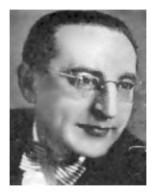
Dagobert D. Runes
Dagobert D. Runes

Dagobert D. Runes was a distinguished American philosopher, author, and translator, born on January 6, 1902, and deceased on September 24, 1982. He is recognized for his translations of the works of notable philosophers, including Immanuel Kant and Friedrich Nietzsche, and for his own philosophical contributions. more

You May Also Like

“An editor doesn't just read, he reads well, and reading well is a creative, powerful act. The ancients knew this and it frightened them. Mesopotamian society, for instance, did not want great reading from its scribes, only great writing. Scribes had to submit to a curious ruse: they had to downplay their reading skills lest they antagonize their employer. The Attic poet Menander wrote: "those who can read see twice as well." Ancient autocrats did not want their subjects to see that well. Order relied on obedience, not knowledge and reflection. So even though he was paid to read as much as write messages, the scribe's title cautiously referred to writing alone (scribere = "to write"); and the symbol for Nisaba, the Mesopotamian goddess of scribes, was not a tablet but a stylus. In his excellent book A History of Reading, Alberto Manguel writes, "It was safer for a scribe to be seen not as one who interpreted information, but who merely recorded it for the public good." In their fear of readers, ancients understood something we have forgotten about the magnitude of readership. Reading breeds the power of an independent mind. When we read well, we are thinking hard for ourselves—this is the essence of freedom. It is also the essence of editing. Editors are scribes liberated to not simply record and disseminate information, but think hard about it, interpret, and ultimately, influence it.”

“One of the difficulties of thinking clearly about anything is that it is almost impossible not to form our ideas in words which have some previous association for us; with the result that our thought is already shaped along certain lines before we have begun to follow it out. Again, a word may have various meanings, and our use of it in one sense may deceive our readers (or even ourselves) into supposing that we were using it in some other sense.”