Quotessence
Home / Quotes / Quote by Louisa May Alcott

Quote by Louisa May Alcott

“Rome took all the vanity out of me, for after seeing the wonders there, I felt too insignificant to live, and gave up all my foolish hopes in despair." "Why should you, with so much energy and talent?" "That's just why, because talent isn't genius, and no amount of energy can make it so. I want to be great, or nothing. I won't be a common-place dauber, so I don't intend to try anymore.”

Quote by Louisa May Alcott

Work

Little Women

Set in the mid-19th century, this enduring tale follows the adventures and challenges of Meg, Jo, Beth, and Amy March, four sisters from a modest New England family. The narrative explores themes of love, loss, and the pursuit of individual dreams amidst the backdrop of a turbulent period in American history. more

Author

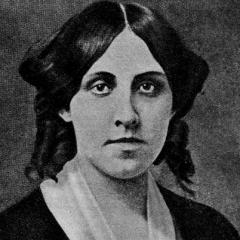
Louisa May Alcott
Louisa May Alcott

American novelist, famous for works such as 'Little Women'. Born on November 29, 1832, and died on March 6, 1888. more

You May Also Like

“The true artist will let his wife starve, his children go barefoot, his mother drudge for his living at seventy, sooner than work at anything but his art. To women he is half vivisector, half vampire. He gets into intimate relations with them to study them, to strip the mask of convention from them, to surprise their inmost secrets, knowing that they have the power to rouse his deepest creative energies, to rescue him from his cold reason, to make him see visions and dream dreams, to inspire him, as he calls it. He persuades women that they may do this for their own purpose whilst he really means them to do it for his. He steals the mother’s milk and blackens it to make printer’s ink to scoff at her and glorify ideal women with. He pretends to spare her the pangs of child-bearing so that he may have for himself the tenderness and fostering that belong of right to her children. Since marriage began, the great artist has been known as a bad husband. But he is worse: he is a child-robber, a blood-sucker, a hypocrite, and a cheat. Perish the race and wither a thousand women if only the sacrifice of them enable him to act Hamlet better, to paint a finer picture, to write a deeper poem, a greater play, a profounder philosophy! For mark you, Tavy, the artist’s work is to shew us ourselves as we really are. Our minds are nothing but this knowledge of ourselves; and he who adds a jot to such knowledge creates new mind as surely as any woman creates new men. In the rage of that creation he is as ruthless as the woman, as dangerous to her as she to him, and as horribly fascinating. Of all human struggles there is none so treacherous and remorseless as the struggle between the artist man and the mother woman. Which shall use up the other? that is the issue between them. And it is all the deadlier because, in your romanticist cant, they love one another.”