Quotessence
Home / Quotes / Quote by Dorothy Parker

Quote by Dorothy Parker

Author

Dorothy Parker
Dorothy Parker

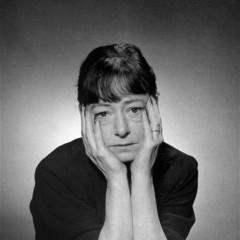
Dorothy Parker, an American poet, playwright, and critic, was born on August 22, 1893, and died on June 7, 1967. Known for her wit, satire, and humor, she is a prominent figure in 20th-century American literature. more

You May Also Like

“Ellen, he knew now, would marry him if he chose; but he had been sure for years that he would never marry anyone, and he was sure tonight he would never marry Ellen. 'We'd always be either on the peaks, sublimely happy, or in the bleak valleys of anger and despair,' he told himself; and he knew he would prefer to dwell in a pleasant intervale, one of those lovely spots which so often he had seen along a northern river, where the grassy meadows were dotted with tall graceful elms, and quiet deer came feeding, and a little brook sang near-by, and there were friendly hills all about, and perhaps a few mountains, not too closely seen, visible far away. Yes, it was peace a man wanted. He reflected with an amused smile that Ruth was much more the sort of woman an author ought to marry: self-effacing, strong, serene, with a sense of humor which occasionally revealed itself in her pleasant eyes. But of course there was no question of his marrying Ruth! For that matter, there was no question of his marrying anyone!”

“It wasn’t always that way for the wives of powerful men. Prior to the 1960s, the press generally kept mum about the sex lives of politicians. When Eleanor Roosevelt discovered her husband’s affair by reading a love letter, she kept it to herself — and used it to gain the upper hand in her marriage, which had the additional benefit of setting her free to pursue writing and social activism.”

“No son ever develops into manhood without, in some way, being disloyal to his mother. If he remains with her, to comfort her and console her, then he never gets out of his mother complex. Often a mother will do all she can to keep her son with her. One of the most subtle ways is to encourage him the idea of being loyal to her; but if he gives in to her completely then she often finds herself with a son severely injured in his masculinity. The son must ride off and leave his mother, even if it appears to mean disloyalty, and the mother must bear this pain. Later, like Parsifal, the son may come back to the mother and they may find a new relationship, on a new level; but this can only be done after the son has first achieved his independence and transferred his affection to a woman, either in an interior way with his own inner feminine side or in an exterior way with a real female companion of his own age. In our myth, Parsifal's mother died when he left. Perhaps she represents the kind of woman who can only exist as a mother, who dies when this role is taken from her because she does not understand how to be an individual woman, but only a "mother.”