Quotessence
Home / Quotes / Quote by Shirley Chisholm

Quote by Shirley Chisholm

“A sales tax is the enemy of the poor person. It is the enemy of the elderly couple who live on fixed income. And it is the enemy of the everyday American consumer, poor or not. (From Voices of Multicultural America)”

Quote by Shirley Chisholm

Author
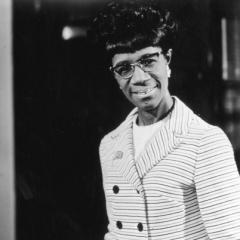
Shirley Chisholm
Shirley Chisholm

Shirley Chisholm was an American politician who became the first African American woman to serve in Congress and the first woman to run for a major party's nomination for President of the United States. Born on November 30, 1924, she represented New York's 12th congressional district from 1969 to 1983. A member of the Democratic Party, Chisholm was known for her advocacy for civil rights, women's rights, and social welfare. Her presidential campaign in 1972 marked a significant milestone in American politics. more

You May Also Like

“I know a lot of Americans who would be glad to settle for better bus service from their home to their jobs, or from poor neighborhoods to areas of the city where jobs are to be found. Repeated studies of riots in urban ghettos show that lack of adequate transportation was a big factor in the discontent and bitterness which caused riot conditions to erupt, but President Nixon's answer is to build a space shuttle or an SST with precious public funds, to serve a tiny elite of the population or to stimulate the economy of a state or region by creating massive and useless technological publicworks projects. (From Voices of Multicultural America)”

“Porque el hogar protejido por las leyes, y las riquezas, se beneficia y se proteje más y se olvida el hogar pobre. Se olvida que la familia pobre, en vez de enviar á sus hijos á la escuela los utiliza vendiendo frutas ó los tiene que alquilar, ó hacer trabajos superiores á su edad.”

“Child care is one of the most difficult problems for a woman to have to face alone. Not only is she tormented with having to leave the raising of her children to someone else, but she wants the best of care for them. For the amount of money that she may be able to pay from her meager wages, it is likely that she will be lucky to find anyone at all to take care of the children.”

“Of course clergymen and other paid teachers and moralists admonished us to be upright and unselfish, and for people with good incomes it was easy to condemn those living on the edge of poverty as inferior, impractical, shiftless, and lacking respect for the social code. It was easy to shout thief at the other fellow when you had no temptation to steal-I mean steal in a petty way. But stealing in a big way was often accepted as good business judgment.”

“I am on Aid to Families with Dependent Children, and both my children are in school. . . . I have graduated from college with distinction, 128th in a class of over 1000, with a B.A. in English and sociology. I have experience in library work, child care, social work and counseling. I have been to the CETA office. They have nothing for me. . . . I also go every week to the library to scour the newspaper Help Wanted ads. I have kept a copy of every cover letter that I have sent out with my resume; the stack is inches thick. I have applied for jobs paying as little as $8000 a year. I work part-time in a library for $3.50 an hour, welfare reduces my allotment to compensate. . . . It appears we have employment offices that can’t employ, governments that can’t govern and an economic systemthat can’t produce jobs for people ready to work. . . . Last week I sold my bed to pay for the insurance on my car, which, in the absence of mass transportation, I need to go job hunting. I sleep on a piece of rubber foamsomebody gave me. So this is the great American dream my parents came to this country for: Work hard, get a good education, follow the rules, and you will be rich. I don’t want to be rich. I just want to be able to feed my children and live with some semblance of dignity. . . .”

“Automation, globalization, and increased education requirements - compounded by failures in government and institutions - have given rise to a generation of disconnected and fearful people. The number of men who have dropped out of the labour force and stopped looking for work has quintupled since the 1950s. The result is a form of community trauma deeply felt in many rural areas: intergenerational poverty, long-term unemployment, degraded environments, disconnected social relationships, and destructive social norms.”

“Many white Americans of good will have never connected bigotry with economic exploitation. They have deplored prejudice, but tolerated or ignored economic injustice. But the Negro knows that these two evils have a malignant kinship. He knows this because he has worked in shops that employ him exclusively because the pay is below a living standard. He knows it is not an accident of geography that wage rates in the South are significantly lower than those in the North. He knows that the spotlight recently focused on the growth in the number of women who work is not a phenomenon in Negro life. The average Negro woman has always had to work to help keep her family in food and clothes.”