Quotessence
Home / Quotes / Quote by Mikhail Lermontov

Quote by Mikhail Lermontov

“Nay, what is human love?—a stirring Of youthful blood to quicker flow, But love grows chiller, as recurring Days, years and decades, come and go.”
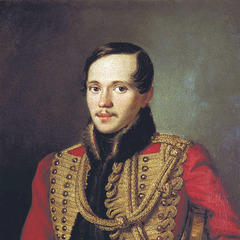
Quote by Mikhail Lermontov

Book:Demon

Work

Demon

Browse quotes and source details for this work. more

Author

Mikhail Lermontov
Mikhail Lermontov

A renowned Russian writer, poet, and literary critic. His works are characterized by their profound thoughtfulness and artistic value, and have had a profound impact on Russian literature. more

You May Also Like

“We hear a great deal about the rudeness of the ris- ing generation. I am an oldster myself and might be expected to take the oldsters' side, but in fact I have been far more impressed by the bad manners of par- ents to children than by those of children to parents. Who has not been the embarrassed guest at family meals where the father or mother treated their grown-up offspring with an incivility which, offered to any other young people, would simply have termi- nated the acquaintance? Dogmatic assertions on mat- ters which the children understand and their elders don't, ruthless interruptions, flat contradictions, ridicule of things the young take seriously some- times of their religion insulting references to their friends, all provide an easy answer to the question "Why are they always out? Why do they like every house better than their home?" Who does not prefer civility to barbarism?”

“It is an observation at first sight melancholy but in the end, perhaps, enlightening, that the earliest poets are the most ideal, and that primitive ages furnish the most heroic characters and have the clearest vision of a perfect life. The Homeric times must have been full of ignorance and suffering. In those little barbaric towns, in those camps and farm, in those shipyards, there must have been much insecurity and superstition. That age was singularly poor in all that concerns the convenience of life and the entertainment of the mind with arts and sciences. Yet it had a sense for civilizations.”

“Thus, the seizure of the island Kabakon by our friend looked quite different depending on the viewpoint from which one observed the scenario and who one actually was. This splitting of reality into various components was, however, one of the chief characteristics of the age in which Engelhardt's story takes place. To wit: modernity had dawned; poets suddenly wrote fragmented lines; grating and atonal music, which to unschooled ears merely sounded horrible, was premiered before audiences who shook their baffled heads, was pressed into records and reproduced, not to mention the invention of the cinematograph, which was able to render our reality exactly as tangible and temporally congruent as it occurred; it was as if it were possible to cut a slice of the present and preserve it in perpetuity between the perforations of a strip celluloid. All this, however, did not move Engelhardt; he was on his way toward withdrawing not only from modernity dawning the world over, but altogether from what we non-Gnostics denote as progress, as, well, civilization. Engelhardt took a decisive step forward onto the shore; in reality, it was a step back into a barbarism most exquisite.”