Quotessence
Home / Quotes / Quote by Fyodor Dostoevsky

Quote by Fyodor Dostoevsky

“You know it will be sad to be left alone, utterly alone, and to have not even anything to regret - nothing, absolutely nothing... for all that you have lost, all that, all was nothing, stupid, simple, nullity, there has been nothing but dreams.”

Quote by Fyodor Dostoevsky

Author
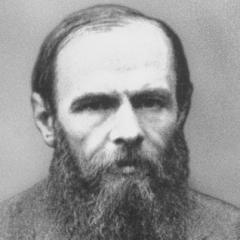
Fyodor Dostoevsky
Fyodor Dostoevsky

A renowned Russian novelist and a pioneer of psychological novels. His works deeply reveal the complexity of human nature and the injustice of society, having a profound impact on literature worldwide. more

You May Also Like

“I read that beauty has historically demanded replication. We make more of anything we find aesthetically pleasing, whether it's a vase, a painting, a chalice, a poem. We reproduce it in order to keep it, extend it through space and time. To gaze at what pleases -- a fresco, a peach-red mountain range, a boy, the mole on his jaw, -- is, in itself, replication -- the image prolonged in the eye, making more of it, making it last. Staring into the mirror, I replicate myself into a future where I might not exist. ...Because his offering extended me into something worthy of generosity, and therefore seen. It was that very moreness that I wanted to prolong, to return to.”

“What about you? What do you do?” I needed to ask questions, draw him out. I needed to find out all the information I could. My voice sounded strong and smooth, but my hands were shaking. I put them in my lap so he couldn’t see. “I prey on innocent villagers and terrify their children,” he said with a nasty smile. “And sometimes when I’m feeling really evil, I read books or paint.”

“If you don't want to tear off the clothes of the person you're on a date with and jump into bed with them, then what's the point? I'd never date; instead, I'd have lots of good friends and hug them a lot and life would be easier and neater and uncomplicated.”

“All my life I have refused to be for or against parties, for or against nations, for or against people. I never seek novelty or the eccentric; I do not go from land to land to contrast civilizations. I seek only, wherever I go, for symbols of greatness, and as I have already said, they may be found in the eyes of a child, in the movement of a gladiator, in the heart of a gypsy, in twilight in Ireland or in moonrise over the deserts. To hold the spirit of greatness is in my mind what the world was created for. The human body is beautiful as this spirit shines through, and art is great as it translates and embodies this spirit.”

“Vanity was the beginning and the end of Sir Walter Elliot's character; vanity of person and of situation. He had been remarkably handsome in his youth; and, at fifty-four, was still a very fine man. Few women could think more of their personal appearance than he did; nor could the valet of any new-made lord be more delighted with the place he held in society. He considered the blessing of beauty as inferior only to the blessing of a baronetcy; and the Sir Walter Elliot, who united these gifts, was the constant object of his warmest respect and devotion.”