Quotessence
Home / Quotes / Quote by James Herbert

Quote by James Herbert

“My emotions were fast becoming those of a dog, as though, now my search was over, a ghost had been vanquished. The ghost was my humanness. I felt free, free as any bird in the sky. Free to live as a dog. I ran for nearly a day and, when I finally dropped, the last remnants of my old self had been purged.”

Quote by James Herbert

Book:Fluke

Work

Fluke

Browse quotes and source details for this work. more

Author

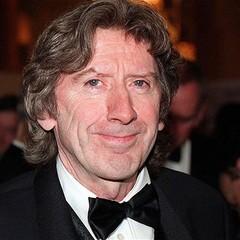
James Herbert
James Herbert

James Herbert, born on April 8, 1943 and died on March 20, 2013, was a renowned British writer known for his suspense, horror, and science fiction novels. His works, characterized by their thrilling plots and imaginative themes, have won the hearts of readers. His most famous novels include 'The Ghosts of Moorgate' and 'The Rats'. more

You May Also Like

“How could such a bitter thing become a means of pleasure? Everything on Valentine was the opposite. Work needn't be suffering, it could unite folks. A bright child like Chester might thrive and prosper, as Molly and her friends did. A mother raise her daughter with love and kindness. A beautiful soul like Caesar could be anything he wanted here, all of them could be: own a spread, be a schoolteacher, fight for colored rights. Even be a poet. In her Georgia misery she had pictured freedom, and it had not looked like this. Freedom was a community laboring for something lovely and rare.”

“Ever since the French Revolution, people throughout the world have gradually come to see both social equality and individual freedom as fundamental values. Yet the two values contradict each other. Equality can be ensured only by curtailing the freedoms of those who are better off. Guaranteeing that every individual will be free to do as he wishes inevitably short-changes equality. The entire political history of the world since 1789 can be seen as a series of attempts to reconcile this contradiction. Just as medieval culture did not manage to square chivalry with Christianity, so the modern world fails to square liberty with equality. But this is no defect. Such contradictions are an inseparable part of every human culture. In fact, they are culture’s engines, responsible for the creativity and dynamism of our species. Just as when two clashing musical notes played together force a piece of music forward, so discord in our thoughts, ideas and values compel us to think, reevaluate and criticise. Consistency is the playground of dull minds.”

“If one reads attentively, Wittgenstein writes as much in one of the rare pas- sages in which he makes use (in English) of the term “to constitute” with respect to the rules of chess: What idea do we have of the king of chess, and what is its relation to the rules of chess? . . . Do these rules follow from the idea? No, the rules are not something contained in the idea and got by analyzing it. They constitute it. . . . The rules constitute the “freedom” of the pieces. (Wittgenstein 5, p. 86) Rules are not separable into something like an idea or a concept of the king (the king is the piece that is moved according to this or that rule): they are immanent to the movements of the king; they express the autoconstitution process of their game. In the autoconstitution of a form of life what is in question is its freedom.”

“The fact is that the modern implementation of the prison planet has far surpassed even Orwell’s 1984 and the only difference between our society and those fictionalized by Huxley, Orwell and others, is that the advertising techniques used to package the propaganda are a little more sophisticated on the surface. Yet just a quick glance behind the curtain reveals that the age old tactics of manipulation of fear and manufactured consensus are still being used to force humanity into accepting the terms of its own imprisonment and in turn policing others within the prison without bars.”

“This conjunction of an immense military establishment and a large arms industry is new in the American experience. The total influence -- economic, political, even spiritual -- is felt in every city, every State house, every office of the Federal government. We recognize the imperative need for this development. Yet we must not fail to comprehend its grave implications. Our toil, resources and livelihood are all involved; so is the very structure of our society. In the councils of government, we must guard against the acquisition of unwarranted influence, whether sought or unsought, by the militaryindustrial complex. The potential for the disastrous rise of misplaced power exists and will persist. We must never let the weight of this combination endanger our liberties or democratic processes. We should take nothing for granted. Only an alert and knowledgeable citizenry can compel the proper meshing of the huge industrial and military machinery of defense with our peaceful methods and goals, so that security and liberty may prosper together.”