Quotessence
Home / Quotes / Quote by Dylan Thomas

Quote by Dylan Thomas

“On No Work of Words On no work of words now for three lean months in the bloody Belly of the rich year and the big purse of my body I bitterly take to task my poverty and craft: To take to give is all, return what is hungrily given Puffing the pounds of manna up through the dew to heaven, The lovely gift of the gab bangs back on a blind shaft. To lift to leave from the treasures of man is pleasing death That will rake at last all currencies of the marked breath And count the taken, forsaken mysteries in a bad dark. To surrender now is to pay the expensive ogre twice. Ancient woods of my blood, dash down to the nut of the seas If I take to burn or return this world which is each man's work.”

Quote by Dylan Thomas

Work

Collected Poems

This book is a collection of poems that spans different styles and themes, showcasing the diversity of poetic expression. more

Author

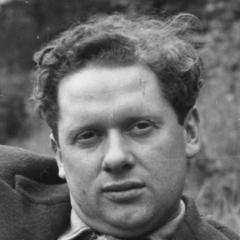
Dylan Thomas
Dylan Thomas

Dylan Thomas was a renowned Welsh poet known for his unique poetic style and passionate recitations. His works were filled with love for life and contemplation of death, making him one of the most influential poets of the 20th century. more

You May Also Like

“But maintaining the primacy of the individual-lifestyle focus—without being transparent about larger influences—is an affront to people living in disadvantage, as it reduces their ill health to poor “choices”and blames them, all the while contributing to the stigma and judgmental thinking that fuels their oppression, worsens their health, and expands the health divide between the advantaged and disadvantaged.”

“By 1980, the economic theory of neoliberalism, with its faith in free markets, property rights, and individual autonomy, had begun to reshape cultural notions of good citizenship. The good citizen was increasingly imagined as an autonomous, informed individual acting responsibly in his or her own self-interest, primarily through the market, as an educated consumer. Dovetailing with the new health consciousness, the ethos of neoliberalism shifted the burden of caring for the well-being of others from the state to the individual and recast health as a personal pursuit, responsibility, and duty. As the burden of solving social problems and preserving the health of individuals shifted from the public to the private sector, alternative dietary ideals reinforced the increasingly important social values of personal responsibility and consumer consumption.”

“For those of us who can and do choose to 'eat right,' understanding the cultural politics of dietary health presents a particular kind of call to awareness and accountability. Given its social and moral freight, eating right is a kind of unexamined social privilege. It is not unlike and is clearly connected to other forms of privilege that usually go unnoticed by the people who possess them, such as whiteness and thinness. Choosing socially sanctioned diets makes subtle but very powerful claims to morality, responsibility, and fitness for good citizenship. We who are lucky enough to have eating habits that align with dietary ideals or inhabit the kinds of bodies that imply we do may think that our shapes or healthy preferences are a sign of our virtue, the result of will, or perhaps nothing more than a lucky twist of fate, but history shows that there are cultural mechanisms that produce the seemingly natural alignment between ideal diets, ideal body sizes, and the habits and preferences of the elite.”

“The pursuit of health became a means for professionalizing middle class of he late nineteenth and early twentieth centuries to know and identify itself and to stake claims to responsibility and authority. Health became a key marker of middle-class morality and identity, but its utility as such derived in large part from the way it could distinguish members of the responsible middle class from those beneath them in the social hierarchy who failed to achieve the goal of health.”