Quotessence
Home / Quotes / Quote by Matthew McConaughey

Quote by Matthew McConaughey

“We read, we wrote, we prayed, we cried, we listened,we screamed, we spoke out, we marched, we helped others in need. But how much do we change for good? It’s sake and forever? For those of us who survived, when and how we see the benefits of what we went through during those turbulent times is relative. But if we work individually to make justified changes for more value driven and righteous tomorrow, the redlight year that 2020 was will one day in the rear view mirror of life inevitably turn green. And perhaps be seen as one of our finest hours.”

Quote by Matthew McConaughey

Work

Greenlights

Browse quotes and source details for this work. more

Author

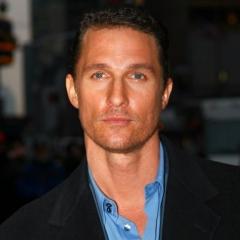
Matthew McConaughey
Matthew McConaughey

Matthew McConaughey is an accomplished American actor, born on November 4, 1969. Renowned for his versatility and acting prowess, he has won the Academy Award for Best Actor. more

You May Also Like

“The assumption that femininity is always structured by and performed for a male gaze fails to take seriously queer feminine desire. The radical feminist critiques of femininity also disregarded the fact that not all who are (seen as) feminine are women. Crucially, what is viewed as appropriately feminine is not only defined in relation to maleness or masculinity, but through numerous intersections of power including race, sexuality, ability, and social class. In other words, white, heterosexual, binary gender-conforming, able-bodied, and upper- or middle-class femininity is privileged in relation to other varieties. Any social system may contain multiple femininities that differ in status, and which relate to each other as well as to masculinity. As highlighted by “effeminate” gay men, trans women, femmes, drag queens, and “bad girls,” it is possible to be perceived as excessively, insufficiently, or wrongly feminine without for that sake being seen as masculine. Finally, the view of femininity as a restrictive yet disposable mask presupposes that emancipation entails departure into neutral (or masculine) modes of being. This is a tenuous assumption, as the construction of selfhood is entangled with gender, and conceptions of androgyny and gender neutrality similarly hinge on culturally specific ideas of masculinity and femininity.”

“It may seem strange to suggest that high levels of illness might make human beings tougher, but the effect on a society of relatively regular and lethal epidemics and the mortality they cause certainly might have created a level of resilience that most of us today probably don't possess.”