Quotessence
Home / Quotes / Quote by Clifford D. Simak

Quote by Clifford D. Simak

“Bridgeport, Wis. July 11, 1987 I write this letter to myself, so that the postmark may prove beyond controversy the day and year that it was written, and I shall not open it but shall place it among my effects against the day when someone, a member of my own family, God willing, may open it and read. And reading, know the thing that I believe and think, but dare not say while I am still alive, lest someone call me touched. For I have not long to live. I have lasted more than a man’s average allotted span, and while I still am hale and hearty, I know full well the hand of time, while it may miss a man at one reaping, will get him at the next. I have no morbid fear of death, nor any sentimental wish to gain the brief immortality that a thought accorded me after I am dead may give me, for the thought itself will be a fleeting one and the one who holds it himself will not have too many years of life, for the years of man are short . . . far too short for any perfect understanding of any of the problems that a lifetime poses. While it is more than likely that this letter will be read by my immediate descendants, who are well acquainted with me, I am still aware that through some vagary of fate it may fall yet unopened into the hands of someone many years after I am long forgotten, or even into the hands of strangers. Feeling that the circumstance which I have to tell is of more than ordinary interest, even at the risk of reporting something which may be well known to the one who reads this letter, I shall here include some of the basic facts about myself and my locality and situation.”

Quote by Clifford D. Simak

Work

Time and Again

In this historical fiction novel, the protagonist embarks on a journey through time, experiencing different eras firsthand. The story delves into the complexities of historical events and the impact of time travel on personal and societal levels. more

Author
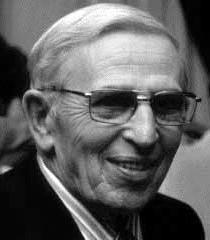
Clifford D. Simak
Clifford D. Simak

Clifford D. Simak was an American science fiction writer known for his unique literary style and profound insights into the cosmos. His works often blend philosophical and scientific elements, exploring the meaning of human existence and the mysteries of the universe. more

You May Also Like

“It’s weird to be twenty-seven and still be believing in fairytales, but it feels normal. I don’t think I’ll be comfortable thinking through love, planning on it, and calculating the probability. That doesn’t mean I will not ugly up my house with practical things, or I won’t fight over laundry. I just think it’s such a strange thing for me to be in love with half my heart and all my brain. I don’t want a dull and practical love life, much less a marriage.”

“What else? She is so beautiful. You don't get tired of looking at her. You never worry if she is smarter than you: You know she is. She is funny without even being mean. I love her. I am so lucky to love her, Van Houten. You don't get to choose if you get hurt in this world, old man, but you do have some say in who hurts you. I like my choices. I hope she likes hers.”

“Elke dag herhaal ik het wonder, wat zeg ik, de triomf, van het moment waarop onze soort het schrift uitvond. Lezen en schrijven, we doen het op den duur zo gedachteloos. Altijd weer het vingervlugge mirakel van ons geheugen dat zich woord voor woord; lettergreep na lettergreep, de totaal willekeurige maar o zo zegenrijke band herinnert tussen een letter en een klank, en wat die verbintenis betekent. Telkens weer die schepping van zin uit een ontstellende ruis die zonder het oor van de ander zonder boodschap zou blijven… En dat mirakel , die dagdagelijkse ontploffing in betekenis, knettert en vonkt terug in de tijd, naar de havens van de Feniciërs, naar de koningen van Sumer, naar de glazuren tegels van de toren van Babel, verspreid in het zand.”

“Every second of every day we are entering a new universe. And we spend so much time wishing our lives were different, comparing ourselves to other people and to other versions of ourselves, when really most lives contain degrees of good and degrees of bad. [...] There are patterns of life... Rhythms. It is so easy, while trapped in just the one life, to imagine that times of sadness or tragedy or failure or fear are a result of the particular existence. That it is a by-product of living a certain way, rather than simply living. I mean, it would have made things a lot easier if we understood there was no way of living that can immunise you against sadness. And that sadness is intrinsically part of the fabric of happiness. You can't have one without the other. Of course, they come in different degrees and quantities. But there is no life where you can be in a state of sheer happiness for ever. And imagining there is just breeds more unhappiness in the life you're in.”

“In one of the most personal of all the writings of Francis we possess, this one from 1226, Francis writes a note of encouragement to his closest male friend, Leo... "I am speaking to you, now, as a mother would, because all of the words we passed between us on the road together I am summarizing in this message and bit of advice. If you ever feel the need to for my counsel, I suggest that you turn to this letter. "My advice is this : In whatever way you feel called to serve the Lord, and to make him happy, to follow his footprint and his poverty, do that, and do that with my blessing and with the blessing of the Lord God. "If you ever want to come and see me, Leo, for the sake of your soul or for any other reason, come, by all means, come back to me.”

“I'm sure you are aware of the history of the Crusaders bringing spices and dried fruits back to England. While these would have been luxuries at first, with the establishment of regular trade routes, spiced cakes would eventually become affordable treats for the common people, and were often associated with the festivals of the religious calendar. Spiced buns, marked with a cross, were being eaten on Good Friday in the fourteenth century, the origin of our Hot Cross Buns, and there are also many local peculiarities linking spices, currants and the church. Banbury cakes, baked for the town's St. Luke's Day fair, are made in an oval shape to signify the cradle of the baby Jesus... REV. SAMUEL WAVERLEY, Banbury”